San Jose Data Centers Revenue Per 50-99 MW: Insights
Gain a comprehensive data-driven perspective on San Jose data centers' revenue per 50-99 MW and explore its important policy implications.

Jordan Wells covers startups, applied AI, and the people building them.
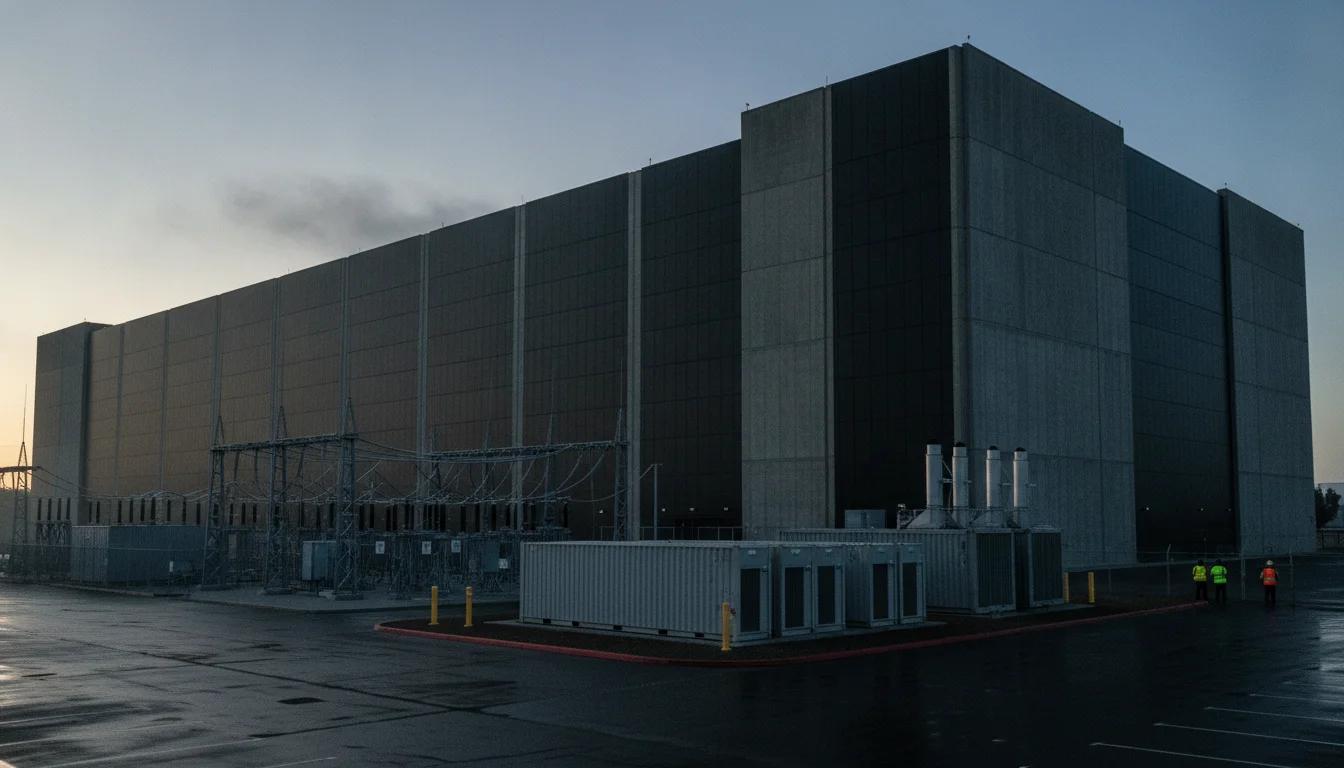
San Jose stands at a crossroads where the economics of data center development intersect with urban planning, energy policy, and community well-being. The city’s leadership has framed large data-center projects as potential engines for fiscal stability, tax base expansion, and infrastructure investment. Yet those promises are not self-fulfilling; they require careful design, transparent governance, and an honest appraisal of costs alongside benefits. As Stanford Tech Review examines this topic, the core question is simple but consequential: what does a 50–99 MW data center really contribute to San Jose’s public finances, and how should policymakers stake the city’s future on that contribution?
According to the April 21, 2026 San José City Council memorandum, a 50–99 MW data center, once fully ramped up, could generate between $3 million and $6 million in unrestricted annual revenue for city services. This finding situates data centers not merely as private industry facilities but as potential fiscal levers for municipal programs. The same memo and related San José materials frame the revenue discussion in the context of broader city services, public programs, and the long arc of infrastructure planning. The implication is clear: the scale of a single large data center can meaningfully affect local budgeting, but only if the revenue is realized, managed, and reinvested with discipline. (Source: San José City Council memorandum, April 21, 2026) (cities-index.com)
The conversation about 50–99 MW sites is not abstract in San Jose. Several official documents and city analyses point to comparable revenue ranges and emphasize the role of large loads in supporting city services. For example, a February–April 2025 briefing and subsequent council materials highlight a similar neighborhood of numbers and a focus on general-fund implications, not just restricted or dedicated streams. A separate council presentation notes a range of roughly $3 million to $7 million in annual revenue per 50–99 MW data center, with the understanding that different revenue channels (unrestricted vs. general fund) may produce different totals. These documents collectively underscore that the revenue story is real, but the precise amount depends on policy design, tax structure, and long-term commitments from data-center developers and utility partners. (Sources: CC 26-009 Presentation; March 18, 2025 Memorandum) (sanjose.legistar.com)
A broader look at the San Jose ecosystem reinforces why this revenue question matters. San José Clean Energy, the city’s municipal grid and procurement program, emphasizes that large-load customers—including data centers—can influence program financing and decarbonization programs, potentially shifting costs and benefits for ratepayers. The city and SJCE have signaled that data centers’ tax contributions and their load profiles could support customer programs and scale clean-energy procurement. In practice, this translates into a governance challenge: ensuring that revenue streams are predictable, transparent to the public, and directed toward verifiable community benefits. (Source: San José Clean Energy page) (sanjosecleanenergy.org)
The current state of data-center development in San Jose is also shaped by market dynamics beyond the city’s borders. Industry research and market briefs show demand for data-center capacity in Silicon Valley continuing to outpace supply, with vacancy tightening and rents rising as developers and users vie for premier locations and robust infrastructure. While this market context helps explain why San Jose is courting large-load projects, it does not automatically translate into commensurate public revenue unless projects reach full build-out and operate within agreed tax and utility frameworks. (Source: CBRE Silicon Valley data-center market briefing) (cbre.com)
Section 1: The Current State
Market scale and capacity realities
San Jose sits at the nexus of a regional data-center cluster that carries substantial economic promise. The North San Jose corridor, as well as adjacent districts, continue to attract developers seeking access to power, fiber, and business-friendly locations. Public discussions frequently reference data centers at or near 99 MW, a size cap that has become a practical shorthand for “large enough to move the needle” in municipal revenue and energy planning. The 99 MW cap is not a mere technical spec; it’s a policy signal about scale, risk, and governance complexity. Local reporting and council briefings emphasize that projects at or near this scale are the ones most likely to influence the city’s revenue profile, electricity load planning, and land-use considerations. (Sources: KQED reporting on 99 MW cap; San José Spotlight coverage of permitting and community reaction) (kqed.org)
Revenue pathways and fiscal implications
The central fiscal claim driving policy discussions is that large data centers can generate meaningful city revenues. The city’s own documents repeatedly connect a 50–99 MW data center to a revenue band in the millions of dollars per year, with distinctions between unrestricted revenue and funds allocated to the General Fund or other programs. The March 18, 2025 memorandum notes an estimated range of about $3.5 million to $6.4 million in annual General Fund revenues for a typical 99 MW data center ramping up over several years, while other sources discuss similar orders of magnitude for unrestricted revenue streams. These ranges are not universal; they depend on tax structures, cost allocations, and policy design. The important takeaway is that the revenue scale is large enough to influence city services—if policy and infrastructure align with build-out realities. (Sources: March 18, 2025 Memorandum; City Council materials) (cities-index.com)
Regulatory landscape and community dynamics
Public policy in San Jose around data centers is not only about tax dollars but also about neighbor impacts, environmental considerations, and long-term city planning. Local outlets and official communications outline a trajectory toward uniform standards, community benefits, and environmental safeguards. A recent mayoral statement and council communications stress the need to reinvest data-center-generated revenue into neighborhoods and to ensure that rising data-center activity aligns with residents’ concerns about energy use, heat, traffic, and urban design. This governance tension—balancing digital growth with livability—frames the revenue debate as a test of municipal competence, not just a math problem. (Sources: SJ mayor's office; local coverage) (sjmayormatt.com)
Section 2: Why I Disagree
1) Revenue is not guaranteed; the arithmetic hinges on policy design
It would be tempting to treat the $3M–$7M per 50–99 MW figure as a simple, guaranteed return. In practice, the city’s own materials demonstrate that the exact revenue depends on whether we measure unrestricted revenue, General Fund revenue, or tax-based contributions tied to specific programs. That distinction matters because it changes not only how the dollars flow, but how they can be deployed in service of the public good. If San Jose adopts a narrow view—counting only a single revenue channel as “the payoff”—it risks underestimating or overestimating the city’s fiscal leverage. The policy design choices—tariffs, franchise arrangements, and incentives—shape whether the revenue materializes in a form that supports streets, schools, and public safety, or whether it remains earmarked for restricted uses. The public record consistently frames the revenue potential as contingent on policy alignment, not an automatic outcome of build-out alone. (Sources: April 21, 2026 memorandum; CC 26-009 presentation) (cities-index.com)
2) Energy and grid strain can erode net value if not managed
A common objection is that the economic upside ignores the energy and grid-hosting costs that accompany large data centers. Data centers are energy-intensive facilities that exert pressure on utility systems, even as they offer revenue through taxes and rates. The broader discourse around data-center energy in Silicon Valley points to a delicate balance: the same facilities that contribute to the tax base also complicate grid planning and decarbonization efforts. Without careful coordination between data-center developers, PG&E or SJCE, and city policymakers, the net value to public finances could be diminished by higher energy costs, needed grid upgrades, or penalties related to environmental targets. Public reporting and industry analysis emphasize that energy availability, reliability, and cost are not abstract concerns but material constraints for long-run revenue projections. (Sources: KQED coverage of environmental concerns; CBRE market briefing; San José Clean Energy discussion) (kqed.org)
3) Community benefits and equity must anchor the math
If the city’s revenue plan relies on large single-site projects without robust community-benefit commitments, the social license to operate can erode. Recent communications from city leaders underscore a push for community benefits that go beyond tax receipts—leaning into equitable outcomes, neighborhood reinvestment, and design standards that mitigate negative externalities. The governance challenge is not merely to capture revenue but to ensure that the revenue translates into tangible improvements for residents who experience energy costs, noise, heat, or traffic associated with large-scale data centers. When community benefits are explicit, the revenue math becomes more credible; when they are vague, the same numbers can feel like corporate subsidies rather than public goods. (Sources: Mayor Matt Mahan press room; San José Spotlight coverage) (sjmayormatt.com)
4) The numbers vary by channel and phase, which complicates strategy
There are at least three distinct revenue lenses here: unrestricted revenue, General Fund revenue, and tax-based revenue (utility or property taxes) tied to data-center activity. Each lens carries different constraints on timing, predictability, and uses. The early-stage memos suggest that a 50–99 MW data center could yield a broad range (e.g., $3M–$6M in unrestricted annual revenue; $3M–$7M in General Fund revenue), while other documents emphasize potential utility-tax impacts and property-tax contributions. This multiplicity is not a sign of weakness; it is a reminder that public finance—especially in a city balancing growth, housing, and energy goals—requires hedged forecasts and flexible policy levers. If policymakers rely on a single figure, they risk misallocating resources or failing to deliver promised benefits. (Sources: April 21, 2026 memorandum; CC 26-009 presentation; Mayor’s budget materials) (cities-index.com)
Section 3: What This Means
Implications for policy design and fiscal strategy
First, clear, explicit policy design is non-negotiable. If the city intends to rely on revenue from 50–99 MW data centers as a meaningful part of urban financing, it must codify how revenue flows will be allocated, the time horizon for revenue realization, and the safeguards to prevent overreliance on a single sector. The memos and briefings suggest a pathway that links revenue to city services and to broader infrastructure and decarbonization programs, but such alignment requires formal governance structures, transparent accounting, and community oversight. A categorical commitment to reinvest in neighborhoods and public services would enhance the credibility of the revenue narrative and reduce political risk. (Sources: April 21, 2026 memo; San José Clean Energy page) (cities-index.com)
Second, revenue planning must be integrated with energy planning and grid resilience. Large-load customers shape not just city revenue but electric-system planning, capacity procurement, and demand-response programs. San Jose’s public documents and industry analyses highlight that a city aiming to attract 50–99 MW-scale centers should coordinate with utilities to secure reliable power, manage load growth, and participate in grid modernization efforts. In this sense, the revenue opportunity is inseparable from the city’s energy strategy and climate goals. (Sources: SJCE materials; CBRE market briefing) (sanjosecleanenergy.org)
Third, transparency and community-benefits provisions should be embedded in every agreement. The current discourse is moving toward formal standards that include community benefits as a core component, not as afterthoughts. This shift matters because it changes public perception and gives residents a stake in the city’s data-center strategy. The mayor’s messages and local reporting indicate a governance direction that seeks to balance the economic upside with neighborhood protections, environmental safeguards, and shared prosperity. Implementing these commitments in binding terms will improve the overall value proposition of data-center growth for San Jose. (Sources: Mayor’s office statement; San José Spotlight coverage) (sjmayormatt.com)
What this means for readers, investors, and policymakers is straightforward: the revenue story is real, but it is not a free lunch. The numbers exist within a framework that requires disciplined policy design, energy-system alignment, and robust governance. If these conditions are met, San Jose can harness the benefits of data-center growth while safeguarding public interests and advancing the city’s broader technology and energy goals.
Closing
San Jose does not have to choose between growth and livability. The data-center revenue potential for 50–99 MW sites is a hinge point that can unlock public services funding and accelerate infrastructure improvements, provided the city couples build-out with clear fiscal rules, energy resilience, and strong community benefits. The central challenge is not whether revenue exists, but whether policy designs can translate that revenue into durable, equitable public value. The evidence from city memos, energy-policy discussions, and market analyses supports a cautious but optimistic stance: define precise channels for revenue, coordinate with utilities to ensure reliable power, and insist on transparent, enforceable community-benefit commitments. If San Jose can do this, the city stands to gain not only a healthier tax base but also a more resilient and inclusive urban economy.
As policymakers consider the next steps, the question to answer is not simply “How much money could a 50–99 MW data center bring in?” but “How will we ensure that the revenue improves daily life for San Jose residents while preserving energy reliability and climate leadership?” The answer will determine whether San Jose’s data-center ambitions become a model for principled growth or a cautionary tale about revenue without accountability.