Tenstorrent Series E Funding Signals AI Hardware Shift
Stanford Tech Review provides an in-depth analysis of Tenstorrent's Series E funding and its significant implications for AI compute hardware trends.

Amara Singh is a seasoned technology journalist with a background in computer science from the Indian Institute of Technology. She has covered AI and machine learning trends across Asia and Silicon Valley for over a decade.
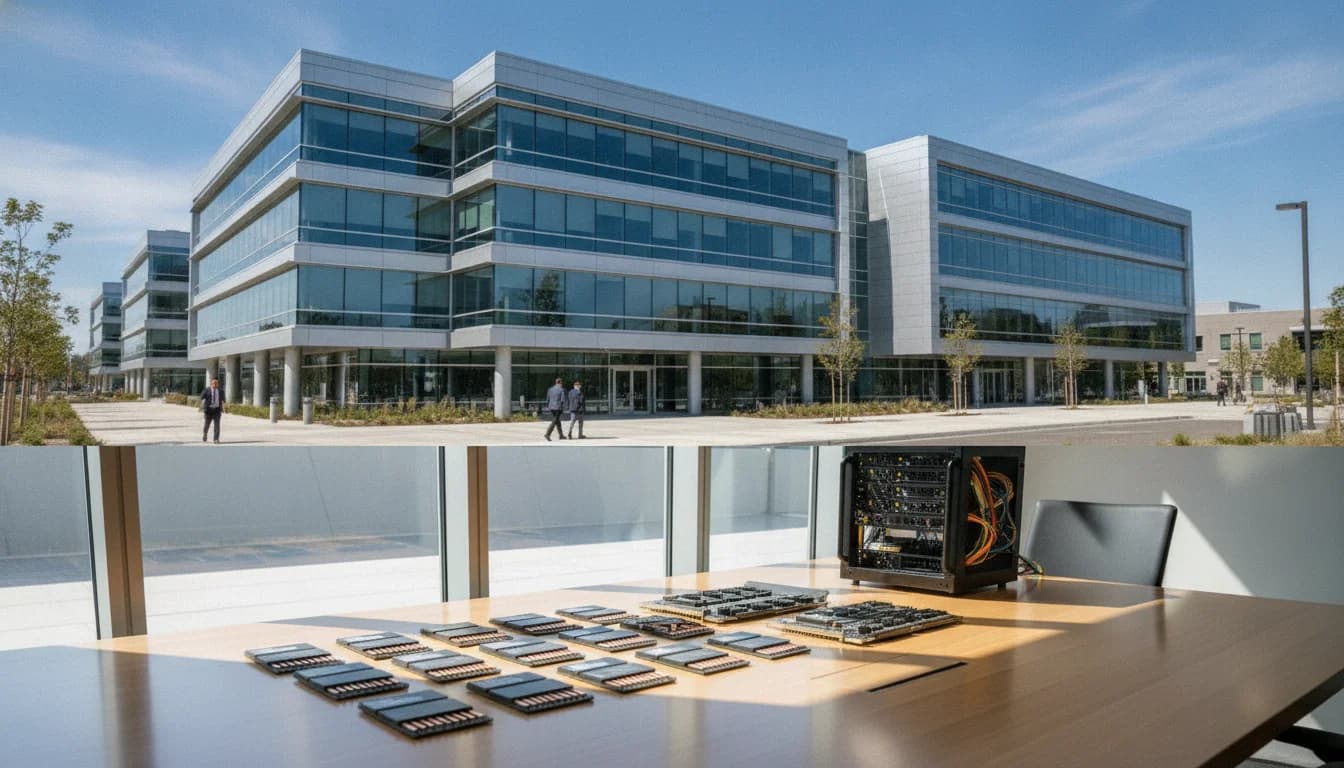
Tenstorrent closed $1.5B in Series E funding at a $6.2B post-money valuation on October 19, 2026, according to Tenstorrent's newsroom. This is not merely a large number in a fintech-spun venture environment; it represents a deliberate recalibration of what investors expect from AI hardware companies in a landscape where software-defined AI compute is increasingly central to strategic value. The equity raise will fund volume manufacturing and global commercial expansion as chip designers, sovereign players, and inference platforms move to own their AI compute, a theme that resonates beyond Tenstorrent’s walls. Tenstorrent newsroom: Tenstorrent Announces a $1.5B Series E at a $6.2B valuation (tenstorrent.com)
This is a moment that invites skepticism as much as it invites optimism. The headline numbers tempt a simple inference: the AI hardware market has finally arrived at a tipping point where ambitious chip makers can raise nine-figure rounds at multi-billion-dollar valuations without sacrificing a long arc toward profitability. Yet while the fact of a $1.5B Series E is clear, its implications depend on deeper dynamics—how Tenstorrent plans to translate funding into durable competitive advantage, what manufacturing capabilities will be scaled, and how the broader market will absorb a wave of next-generation accelerators amid continued GPU dominance and rising hyperscale in-house silicon initiatives. In this piece I argue that Tenstorrent’s Series E funding both confirms a path forward for independent AI hardware players and highlights the risks inherent in relying on round-sized optimism to validate a business model that must deliver hardware, software, and ecosystem parity at scale. The argument proceeds in three moves: first, establishing the current state of AI compute funding; second, laying out why the most common interpretations may be incomplete or overly optimistic; and third, drawing practical implications for investors, policymakers, and enterprise buyers who must decide when to bet on a newer architecture family versus continuing to scale with established players.
The Current State
A funding landscape orbiting AI compute and open architectures
The AI compute market has increasingly revolved around a handful of structural themes: the enduring dominance of Nvidia’s GPUs for many workloads, the rise of alternative accelerators built around custom ASICs and chiplets, and a growing appetite among enterprises for “open” compute ecosystems that promise interoperability, software parity, and vendor resilience. Market observers have long noted that while Nvidia continues to hold a leading share in many segments, investors are looking for diversified exposure to AI compute stacks that blend silicon, software, and ecosystem-building. In late 2024 and through 2025, Tenstorrent itself pursued a Series D round that underscored the push toward broader manufacturing capacity and global scale—an important preface to the 2026 Series E. Tenstorrent’s December 2, 2024 Series D funding closed at over $693 million, with a pre-money valuation of about $2 billion, led by Samsung Securities and AFW Partners; Barclays acted as sole placement agent. This round, documented in the company’s press release and in the related U.S. legal filing, positioned Tenstorrent as a credible, multi-region player pursuing manufacturing breadth and software stack expansion. (tenstorrent.com)
As of 2026, market analyses consistently describe a landscape where Nvidia remains the reference point for many hyperscalers and cloud providers, even as other players build stronger footholds. Industry observers estimate Nvidia’s dominance in AI accelerator deployments remains substantial, while alternative hardware—ranging from AMD and Google’s TPU initiatives to regionally supported chip design efforts—continues to gain traction. A 2026 market snapshot from Epoch AI indicates Nvidia’s share in AI chip supply remains large, with room for competitive pressure from other players, while broader market studies highlight the ongoing transition toward custom ASICs and multi-vendor AI compute strategies. These views help explain why Tenstorrent’s Series E, while large, is part of a broader wave of investment in open architectures and chip design diversity rather than a singular, Nvidia-free disruption. (epoch.ai)
Open questions about timing, scale, and execution color many discussions about Tenstorrent’s funding. The company’s own notes emphasize that the proceeds will accelerate volume manufacturing and global expansion, a signal that Tenstorrent intends to translate R&D into mass production and geographic reach. This is a non-trivial leap for any AI hardware company, because scaling manufacturing is technically and financially demanding, and the value of a chip design is often only realized through reliable supply chains, partner ecosystems, and customer adoption at scale. The emphasis on manufacturing expansion appears in the company’s public communications and in reputable industry commentary that highlights manufacturing as a gating factor for AI accelerator success. (tenstorrent.com)
The role of the ecosystem in AI compute
Beyond the pure numbers, the positioning of Tenstorrent in a broader ecosystem narrative matters. Some observers view Tenstorrent as a vehicle for advancing open hardware and RISC-V-based compute, a direction that Counterpoint Research has highlighted as moving Tenstorrent toward open-frontier architectures that compete with traditional SOC providers. This framing matters, because a successful Series E in this domain is not just about selling hardware; it’s about delivering a compelling software stack, developer tools, and partner networks that can sustain a multi-year trajectory of adoption. The ecosystem narrative aligns with broader industry conversations about the “open frontier” in AI compute and the risk that a hardware-focused play can falter if the software and tooling ecosystems do not mature in step with hardware capabilities. (counterpointresearch.com)
The Current State, summarized in one line: Tenstorrent’s 2026 Series E underscores a durable investor appetite for diverse AI compute strategies, even as the market remains dominated in practice by established players and in practice by multi-architecture data-center deployments. This is not a simple victory lap for a single company; it reflects structural industry dynamics that reward capabilities across hardware, software, and manufacturing ecosystems. For a broader sense of the strategic environment, researchers and industry watchers point to ongoing work in chiplet architectures, open RISC-V ecosystems, and the emergence of multi-vendor compute stacks, which together shape today’s investment calculus. Counterpoint Research’s analyses of Tenstorrent’s roadmap and open-frontier positioning provide a useful frame for these considerations, while market-and-policy studies emphasize the persistent dominance of GPUs in training workloads alongside a rising interest in bespoke accelerators for inference and specialized tasks. (counterpointresearch.com)
Why I Disagree With the public polling of sentiment around Tenstorrent’s Series E funding and the broader AI hardware fundraising environment, it’s important to separate headline scale from sustainable value creation. A clear thesis: while the Series E is a meaningful validation of Tenstorrent’s execution and market potential, it does not automatically translate into a durable, multi-year competitive advantage that can redraw the landscape from Nvidia’s dominance in AI compute. The following arguments build that case, anchored in observed data points, company disclosures, and independent market analysis.
1) The scale of the Series E versus core economics
First, the $1.5B Series E is a substantial round by any measure, but the relative economics of AI hardware ventures require more than a single equity raise to prove out a business model that delivers at-scale hardware manufacturing, software stack maturity, and a global customer base. The post-money valuation of $6.2B is a marker of market optimism and strategic positioning, but it also introduces pressure to translate this valuation into sustained revenue growth, reliable margins, and long-term customer contracts. The ongoing reality of AI hardware economics—where silicon, packaging, memory, and toolchains drive high upfront costs and incremental revenue per unit—means the company must execute across multiple levers, not just raise capital. Tenstorrent’s prior Series D, with a $2B pre-money valuation in 2024, created a baseline for expectations that the 2026 round had to exceed not only in size but in the ability to convert that size into volume shipments and recurring revenue. The 2024 Series D financing was documented with a $693M total size and a $2B pre-money valuation, led by Samsung Securities and AFW Partners, with Barclays as placement agent. These details ground the 2026 round in an evolving trajectory rather than a standalone anomaly. (tenstorrent.com)
Second, market participants often equate large rounds with immediate market disruption. In practice, the AI compute market’s disruption tends to emerge through a combination of product-market fit, reliability of supply chains, and the ability to cultivate a robust software ecosystem. Nvidia’s long-standing market position is not easily displaced by a single fundraising milestone; it is the outcome of years of integrated hardware, software, and ecosystem development. Industry analyses in 2025–2026 consistently underscore Nvidia’s entrenched presence while noting the incremental gains from alternative architectures and supplier diversification. Tenstorrent’s Series E, while persuasive as an indicator of investor confidence, must prove itself in the trenches of manufacturing—an area where the company’s public materials emphasize expansion capacity and global reach but where the actual scale of production and customer adoption remains to be demonstrated. (tomshardware.com)
2) The manufacturing and supply-chain challenge
A core counterargument to optimistic takes is that hardware scale hinges on manufacturing depth and supplier reliability. Tenstorrent has repeatedly highlighted volume manufacturing as a use of proceeds in its public communications. However, turning a design into hundreds or thousands of units with consistent yield, thermal management, and supply chain resilience is a nontrivial, time-consuming process that can make or break a hardware company’s profitability. The market’s focus on manufacturing breadth for AI accelerators is echoed in industry analyses that stress the importance of foundry partnerships, packaging, and reliability engineering for global data-center deployments. While Tenstorrent’s Series E funds these ambitions, the path to material revenue remains dependent on execution across global fabrication and assembly, as well as on building a robust developer ecosystem to drive adoption. (tenstorrent.com)
Counterpoint Research’s open-frontier framing suggests that Tenstorrent’s future lies not only in silicon but also in how well it can integrate with broader software stacks, toolchains, and developer communities. This is a critical dimension: even with a large funding round, the company’s ability to monetize through open software and ecosystem initiatives will influence its long-term success. The industry’s evolving consensus is that a diversified compute stack—combining architecture, software, and services—offers resilience in an environment where hyperscalers increasingly pursue bespoke accelerators as part of their multi-architecture strategies. If Tenstorrent can sustain manufacturing, while continuing to expand its software ecosystem, it can convert a strong Series E into durable, multi-year growth. (counterpointresearch.com)
3) The risk of valuation inflation in AI hardware rounds
A third line of critique centers on valuation dynamics. The 2026 round’s $6.2B post-money valuation sits alongside a broader trend of elevated valuations in AI hardware and software-related funding rounds. While these valuations reflect investor optimism about the addressable market and the potential competitive advantages of alternative hardware, they also raise questions about the path to profitability and the risk of misalignment between valuation and durable unit economics. Investors will require clear milestones—mass production ramp, meaningful contract wins, and a demonstrable software moat—to justify such valuations over time. Market observers note that while Tenstorrent’s strategic pushes into manufacturing and international markets are steps in the right direction, the company will need sustained execution beyond a single round to keep pace with market expectations and the competitive dynamics of AI compute. (epoch.ai)
4) The risk of over-reliance on external bets rather than internal scale
Finally, there is a broader cautionary note about the ecosystem: a single round cannot secure long-term resilience if the underlying market dynamics shift or if customers refocus on hyperscalers’ in-house silicon or other multi-vendor strategies. The risk is not solely about the capital raised but about the ability to convert that capital into a defensible product line with a scalable software stack, strong developer tools, and reliable service components. Analysts who study AI infrastructure emphasize that the most durable outsized wins tend to come from combinations of hardware performance, software maturity, and ecosystem leverage. Tenstorrent faces exactly that trio of tests: can it translate a high-valuation round into durable, open-friendly compute products, a thriving ecosystem, and a scalable manufacturing engine that makes it affordable to deploy widely? The evidence so far suggests cautious optimism, tempered by the sober realities of manufacturing and competition. (counterpointresearch.com)
What This Means The question for policymakers, investors, and enterprise buyers is not simply whether Tenstorrent raised a big round; it’s what the raise signals about future AI compute strategies and how institutions should orient themselves amid continued GPU dominance and the rise of alternative accelerators. The following implications are worth careful attention.
Implications for the AI compute market and industrial strategy
First, Tenstorrent’s Series E underscores a market appetite for multi-architecture compute that includes open IP and diverse supply chains. The emphasis on volume manufacturing points toward a strategy that blends product engineering with manufacturing scale, a combination that can yield more resilient supply for data centers and edge environments. If Tenstorrent succeeds in building out a broader manufacturing footprint and a robust software stack, it could catalyze a broader shift toward regionalized AI compute capability, including sovereign or near-sovereign compute initiatives that want greater control over hardware and software choices. This is consistent with policy discussions about domestic AI hardware capability and resilience, where diversified supply chains and local manufacturing are often highlighted as strategic priorities. Counterpoint Research’s framing of Tenstorrent as part of the open-frontier arc aligns with a longer-term industry trend toward more modular, interoperable AI compute options rather than a single-vendor monopoly. (tenstorrent.com)
Second, the funding round is likely to intensify competition among AI hardware players to secure software ecosystems, developer communities, and manufacturing partnerships. The practical upshot for customers and partners is the potential for more choice, better interoperability tools, and more options for workloads ranging from inference to training to specialized AI workloads. However, the counterbalancing risk is that without credible execution on production-scale hardware and ecosystem maturity, the market may see a glut of announcements without corresponding revenue traction. Investors will watch for concrete proof of revenue ramps, customer commitments, and the ability to deliver stable, cost-effective accelerators at scale. Market studies and industry reports emphasize that while GPUs remain central to AI compute, the migration to multi-architecture stacks is ongoing and will require careful navigation of supply chains, toolchains, and software compatibility. (tomshardware.com)
What this should change in practice for stakeholders
For investors, the Tenstorrent Series E is a reminder that large rounds can signal confidence but do not replace disciplined milestones. Investors should demand transparent milestones around manufacturing ramp curves, supply chain diversification, and progress toward a mature software stack with broad developer adoption. Public filings, interviews, and company disclosures are essential data points for validating progress along these dimensions. The integration of primary documents—such as the company’s own press releases and legal filings for earlier rounds—with independent market analyses will be critical to forming a balanced view of the company’s trajectory. (tenstorrent.com)
For policymakers, the funding landscape highlights opportunities to support resilient AI infrastructure through policy measures that encourage domestic semiconductor manufacturing, open IP ecosystems, and international collaboration on AI safety and governance. The broader literature on AI infrastructure competition calls for balanced policies that promote innovation and maintain a level playing field among diverse hardware providers while ensuring that security and safety considerations remain central to deployment decisions. The OECD’s analysis of global AI infrastructure competition, for example, provides a framework for evaluating market dynamics beyond simple market share figures, emphasizing the role of policy in shaping investment, competition, and supply chain resilience. (oecd.org)
For enterprise buyers, the Tenstorrent Series E signals potential shifts in procurement options and collaboration models. Buyers should consider not only performance metrics but also long-term factors such as software maturity, ecosystem support, and the financial stability of suppliers. A multi-vendor approach that includes Tenstorrent alongside established players could yield a more resilient compute strategy, especially for inference workloads or specialized AI tasks where Tenstorrent’s architecture and software stack might offer differentiating advantages. It also invites a closer look at the total cost of ownership, including software tooling, integration costs, and ongoing maintenance, all of which influence the true business value of AI accelerators in enterprise contexts. Industry analyses and market reports emphasize the importance of evaluating hardware choices within a broader strategic framework that includes software ecosystems and services. (tomshardware.com)
Closing
Tenstorrent’s Series E funding marks a meaningful milestone in the ongoing evolution of AI compute strategies. It reflects a persistent investor interest in diversified hardware ecosystems, reinforces the importance of manufacturing scale and software maturity, and spotlights the strategic tension between incumbent GPU dominance and emerging, multi-architecture alternatives. The path forward for Tenstorrent will hinge on translating capital into reliable production, a robust software stack, and a broad, enduring ecosystem—factors that determine whether this funding round becomes a catalyst for durable growth or a momentary inflection in a longer arc of innovation. As the market continues to experiment with chiplet architectures, open IP approaches, and regional manufacturing capabilities, the broader technology community should watch not only for headline numbers but for the concrete outcomes that determine long-run AI compute resilience and access.
The immediate question for Stanford Tech Review readers is this: in a world where AI workloads are increasingly diverse and distributed across public clouds, private data centers, and edge environments, will Tenstorrent’s Series E funding translate into a scalable, trustworthy compute substrate that can underpin a broad spectrum of AI applications, or will it reveal the limits of even substantial rounds when a company must compete against deep-pocketed incumbents and the realities of global manufacturing? The answers will take time to reveal, but the investment community’s willingness to place a bold bet now signals a broader appetite for strategic, multi-faceted AI hardware ventures that combine silicon design, software development, and manufacturing capability into a coherent, deliverable value proposition. The market is listening, and the next set of milestones—production ramp, customer adoption, and software ecosystem strength—will tell the full story.
The 2026 landscape for AI infrastructure is not just about chips; it’s about ecosystems, manufacturing, and how open architectures can coexist with the powerful incentives of scale. Tenstorrent’s trajectory adds a new thread to the ongoing narrative of AI compute, one that invites collaboration, critical scrutiny, and sustained investment in the hard work of turning a bold vision into reliable, affordable AI at scale. As industry observers, we should welcome the competition while insistently demanding evidence of durable advantage, measurable progress, and responsible governance in the race to build the AI hardware that will power the next wave of innovation. (counterpointresearch.com)