Silicon Valley Data Center Capacity 1,101 MW: a Perspective
A data-driven perspective on Silicon Valley data center capacity 1,101 MW and its implications for energy markets and technology.

Data journalist covering markets, platforms, and the economics of rating systems.
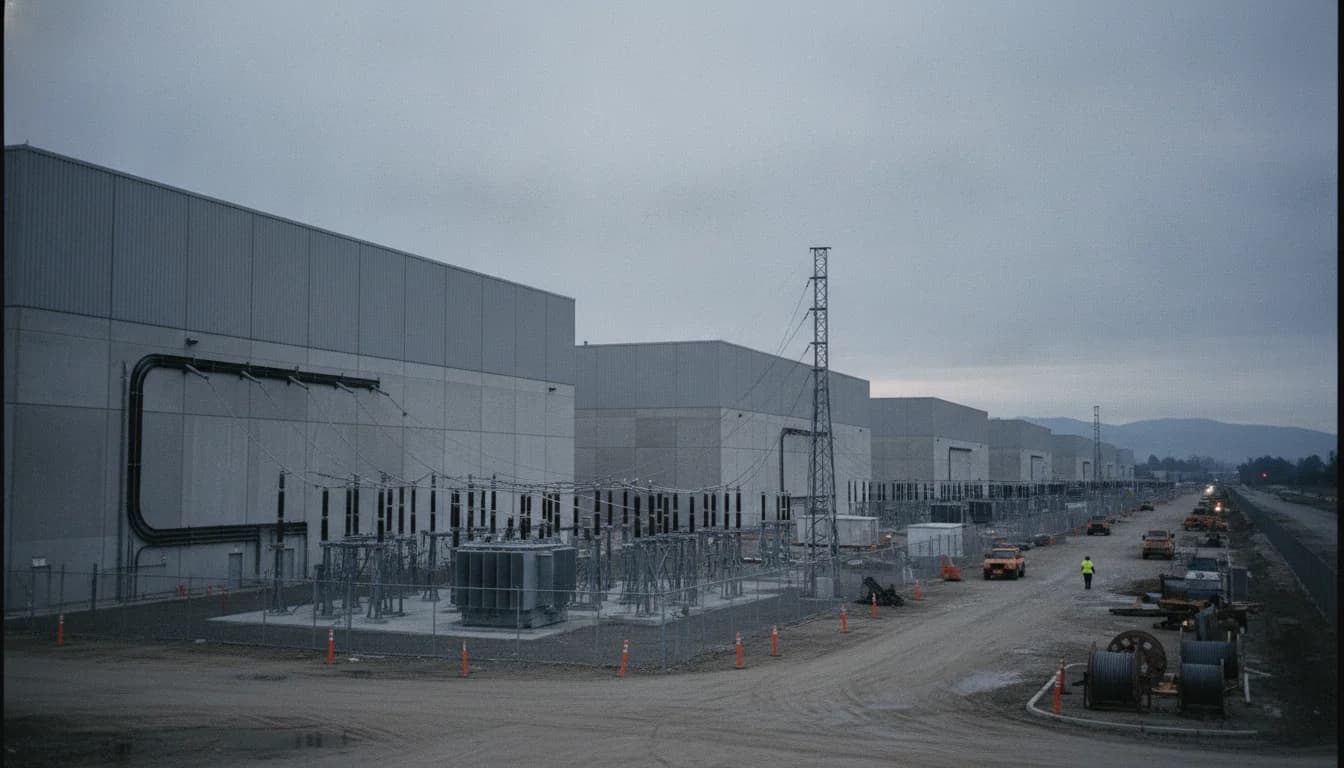
Silicon Valley data center capacity 1,101 MW. That figure, published as of June 2026, has become a shorthand for both the scale of the region’s digital infrastructure and the stubborn reality of the power grid that sustains it. It’s a number that invites two questions at once: What does it really mean to say capacity is 1,101 MW, and how should markets, policymakers, and technology leaders respond to that reality? The answer, I contend, is not a triumphal cry about infrastructure prowess but a measured, data-driven call to align rapid digital growth with reliable, affordable, and sustainable energy delivery. The capacity figure matters, but so do the contours of accessibility, the timing of grid upgrades, and the incentives that shape investment in both hardware and energy systems.
The opening implication is stark: this is not merely a megawatt headline. It signals a market where demand for data center capacity has grown to the point that the most visible constraint is the grid and the permitting treadmill that accompanies it. In a region famed for its innovation culture, the capacity number reveals a bottleneck that could shape the pace of AI deployment, cloud services, and edge computing for years to come. If 1,101 MW is the ceiling today, the real questions are how quickly the ceiling can rise, how much of that capacity will be immediately usable, and what stakeholders must do to unlock more of it without compromising reliability or affordability. This piece argues that a disciplined, policy-informed approach to power, permitting, and siting will determine whether Silicon Valley’s data-center expansion accelerates or plateaus.
Section 1: The Current State
The capacity picture: what the market is actually delivering today
- The headline capacity for Silicon Valley sits at 1,101 MW of operational capacity, including self-build, as of June 2026, according to Cushman & Wakefield data conveyed through Datacentres.com. This figure sits alongside a breakdown of the market’s active and under-construction assets and helps explain why the region remains one of the most watched data-center markets in North America. The same market context notes a tight balance between supply and demand, with ongoing construction and a historically high price environment. (datacentres.com)
- Within that broader figure, the portion of capacity that is readily available for immediate IT workloads is smaller. CBRE’s mid-2026 data-center snapshot for Silicon Valley shows operational capacity of about 509 MW, with roughly 144 MW under construction and a vacancy rate around 4.2%. These numbers illustrate that even as total capacity looks large, the chunk of “cold” capacity—ready for lease or use right now—remains constrained. (datacentres.com)
- The demand side has been robust, driven by hyperscale, cloud, and AI-related users. The market’s absorptive momentum has varied by submarket and time, but the broader North American data center trend in H1 2026 underscored that Silicon Valley remains a focal point for both developers and large tenants, even as power and grid constraints impose frictions. CBRE’s H1 2026 findings showed net absorption in the region and a pipeline of new capacity, underscoring ongoing activity despite constraints. (cbre.com)
Prevailing assumptions
- The conventional view is that a region with Silicon Valley’s pedigree in technology and venture funding should accelerate data-center growth in step with demand. Industry reports consistently connect demand drivers—AI, cloud, and digital workloads—with ongoing construction and investment. Yet the same reports emphasize that power availability and grid readiness are the principal brakes on rapid expansion, not just in Silicon Valley but in major markets with similar energy infrastructures. The core assumption—more megawatts equal faster growth—is being tested by real-world constraints on transmission, generation, and the permitting timeline. This tension between ambition and infrastructure forms the backbone of the current market narrative. (cushmanwakefield.com)
Section 2: Why I Disagree
The capacity headline needs context: not all megawatts are equally usable
The central contention is that “1,101 MW” is a useful headline, but it obscures critical nuance about timing, reliability, and actual IT load deliverability. The distinction between “operational capacity” and “IT load ready for work” matters when AI workloads scale and latency becomes a factor. Capacity summed across hyperscale self-build and colocation may overstate what the market can monetize in the near term. In other words, a large number does not automatically translate into a correspondingly large, reliable, and accessible pool of compute power for customers today. This is not a trivial semantic debate; it changes how operators negotiate power purchase agreements, how regulators assess grid readiness, and how corporate buyers evaluate data-center propositions. The practical implication is that policy and market design should center on deliverable IT capacity, not just installed nameplate capacity. As Cushman & Wakefield’s H1 2026 data-center outlook highlights, the path from “capacity” to “actual usable IT load” depends on power allocation, transmission access, and the ability of the grid to meet peak needs without destabilizing service. (cushmanwakefield.com)
1) Power constraints shape the value of capacity
If you take the 1,101 MW figure as a starting point, the next question is: how much of that capacity can be tapped for actual workloads in a given hour? Power delivery is a function of grid reliability, interconnection timelines, substation capacity, and the local utility’s constraints. In Silicon Valley, the utility landscape—dominated by Silicon Valley Power and the broader California energy system—presents constraints that can throttle ramp-ups, even when developers bring new facilities online. The market’s narrative repeatedly notes grid upgrades, transmission expansion, and large-load tariffs as gating items that determine whether capacity translates into ready-to-serve IT load. The H1 2026 Cushman & Wakefield and CBRE reports emphasize that while inventory exists, the practical exposure to customers remains tempered by grid and permitting realities. Until those frictions ease, “capacity” remains a pipeline metric more than a guaranteed throughput metric. (cushmanwakefield.com)
2) Location concentration and latency: not all megawatts are equal
Silicon Valley’s capacity is highly concentrated among a handful of operators and campuses. This concentration yields benefits—breathable fiber access, deep interconnection ecosystems, and access to a skilled workforce—but it also concentrates risk. When a small number of players control the majority of capacity, external shocks—grid outages, permitting delays, or extreme weather—can have outsized effects on regional reliability and pricing. The market data underscore that active, under-construction, and planned capacity are not evenly distributed, and a few major campuses can swing the region’s overall utilization and price signals. The data also reveal that, even as the total megawatts rise, the “accessible” pool for new tenants remains sensitive to siting and infrastructure readiness. In practice, enterprises must weigh not only megawatts but also the reliability of interconnection, the proximity to peering networks, and the risk profile of the campus operator. The CBRE and Cushman Wakefield analyses corroborate this nuanced view, showing tight supply and elevated costs driven by power constraints and site availability. (datacentres.com)
3) The timing problem: market cycles and grid readiness
A further disagreement with the simplistic interpretation of the 1,101 MW headline is temporal. Capacity today does not automatically imply capacity tomorrow, particularly in a market facing regulatory, permitting, and grid-connection backlogs. The H1 2026 market updates emphasize that development pipelines exist, but the delivery of new capacity is uneven and subject to local approvals, tariff structures, and transmission access. In other words, the market may have a robust long-run arc, but the near-term trajectory is bumpy, reflecting the friction between rapid data-center expansion and the velocity of grid and permitting reforms. This is not a call to slow down; it is a call to synchronize growth with energy-system modernization and to design incentives that align private investment with public-interest objectives. The data conceptually supports a staged approach to expansion, with a disciplined focus on grid upgrades and siting that match demand growth. (cbre.com)
4) The policy and economics lens: incentives, pricing, and risk
From a policy standpoint, the 1,101 MW figure raises questions about pricing signals and investment risk. If the region remains power-constrained, developers may need more attractive returns to justify high capex, and tenants may face higher energy costs or less favorable contract terms. The energy price context—industrial rates around $0.164/kWh as reported in market analyses—adds a cost dimension that feeds into total cost of ownership and tenancy economics. Regulators and utilities are increasingly asked to balance reliability with affordability and environmental goals, which can slow, or alternatively stimulate, efficient, grid-friendly solutions. The practical takeaway is that capacity alone does not determine profitability or competitiveness; the intersection of energy pricing, capacity availability, and speed of interconnection determines the real-world economics of Silicon Valley data centers. This framing aligns with CBRE’s H1 2026 market narrative about constraints and opportunity coexisting in a market driven by AI and hyperscale demand. (datacentres.com)
A mid-body quotation to anchor the perspective
CBRE’s H1 2026 narrative captures the tension between demand and supply in a concise way: “AI-driven demand fuels absorption, while limited power availability and scarce development sites keep market conditions tight.” This encapsulates the paradox that underpins my disagreement with a simple capacity-forward story. The market is expanding, but the grid and permitting processes can dampen the speed and scale of that expansion. The quotation, drawn from the CBRE/market-trend lens, helps readers understand why a tall capacity number should be interpreted in the context of deliverability, reliability, and cost. (cbre.com)
Section 3: What This Means
Implications for operators, policymakers, and users
Align capital with grid modernization and transmission readiness If Silicon Valley is going to translate 1,101 MW of reported capacity into real, usable IT load for the AI era, grid modernization cannot be an afterthought. Utilities and policy-makers should prioritize transmission upgrades, faster interconnection processes, and more predictable tariff structures that incentivize investment while maintaining reliability. The Cushman & Wakefield H1 2026 update and CBRE market notes stress that growth is real, but the path to delivering that growth rests on infrastructure readiness and policy clarity. For investors, this implies a disciplined approach to project selection that favors markets where grid upgrades are being funded and delivered on a credible timeline. The long-term payoff is fewer project delays, lower risk premia, and more predictable returns on data-center campuses that can scale with AI demand. (cushmanwakefield.com)
Rethink siting strategies and energy partnerships A takeaway from the current state is that flexible siting strategies, including co-located microgrids, on-site generation, and robust energy storage, can help bridge near-term gaps between capacity and deliverable IT load. The energy landscape around data centers is evolving toward multiple, complementary energy options that improve resilience and reduce exposure to single-point grid constraints. This means that developers and tenants should pursue power purchase agreements that include resilience options, grid-enabled services, and, where feasible, on-site or regional energy storage. In practice, this means more transparent discussions with SVP and other local utilities about load commitments, voltage stability, and peak-demand management. The market context, including high power costs, supports exploring energy reliability solutions as a core element of data-center strategy. (datacentres.com)
Elevate governance around permitting and stakeholder engagement A more nuanced interpretation of the capacity figure underscores that faster growth will only occur if siting and permitting are aligned with the pace of demand. The policy environment in California and the broader Bay Area has always demanded careful consideration of environmental impacts, land-use regulations, and community concerns. The data center expansion narrative benefits from governance that is predictable, data-driven, and transparent about timelines and conditions. This is not about rushing projects; it’s about building predictable, evidence-based milestones—milestones that allow developers, utilities, and regulators to coordinate and reduce friction. The data and market commentary in H1 2026 emphasize that the near-term catalyst for expansion is not simply more megawatts but a more efficient, coordinated approach to siting and grid readiness. (cushmanwakefield.com)
Consider the geopolitical and market implications Beyond the local; there’s a broader arc. Silicon Valley’s data-center capacity figure sits within a North American and global context where hyperscale growth, AI workloads, and cloud transformations are reshaping energy demand and procurement strategies. The Cushman & Wakefield update frames the broader market dynamics with a regional lens, highlighting how local conditions—transmission availability, regulatory requirements, and capital availability—shape outcomes in markets that matter to global digital supply chains. For readers and readers’ organizations, the practical implication is to think holistically about energy strategy: what markets will deliver the right mix of reliability, cost, and speed for the next wave of AI-enabled services? The answer will hinge on more than megawatts; it will hinge on policy, infrastructure, and market design that enable scalable, resilient, and affordable data-center capacity. (cushmanwakefield.com)
Closing
The thrust of this argument is not that the Silicon Valley megawatt figure is uninteresting, but that it is incomplete without the context of grid readiness, siting constraints, and the economics of delivering usable IT load. The 1,101 MW headline captures a moment in time—a moment when demand for data center capacity meets a grid and regulatory environment still catching up. The right response is to press for targeted grid investments, reformed permitting processes, and energy strategies that pair capacity with reliability and affordability. In doing so, Silicon Valley can sustain its leadership in technology while ensuring that the electricity backbone—our energy system—keeps pace with the speed of innovation.
If you care about AI progress, cloud resilience, and the future of digital services, the takeaway is straightforward: don’t mistake a megawatt figure for guaranteed performance. The real question is how we convert capacity into dependable IT load, how we price reliability, and how we accelerate grid and policy reforms so the next wave of data-center growth is not just large, but durable and affordable. The path forward requires collaboration among operators, utilities, policymakers, and end users—each playing a distinct but interdependent role in turning the headline into sustained capability for the region’s innovation economy.
In the end, the question we should ask is not simply how much capacity Silicon Valley has today, but how much of that capacity will be ready for action tomorrow, next year, and the year after. The answer will determine whether Silicon Valley’s data-center ecosystem remains a model of rapid, scalable technology deployment or a cautionary tale of growth constrained by infrastructure lag. The data, the models, and the policy levers exist to guide a future where 1,101 MW becomes not just a number on a page, but a reliable engine for progress.