What Is OpenAI Astra? The Multi-Agent AI Model Explained
OpenAI's Astra, previewed August 1, 2026, is a multi-agent system that solved ten decade-old math problems with Lean-verified proofs for about $2,000 in compute. What it is, what it did, and whether it becomes GPT-6.

Priya Raman is a staff writer at Stanford Tech Review covering AI, semiconductors, and emerging technologies across Silicon Valley.
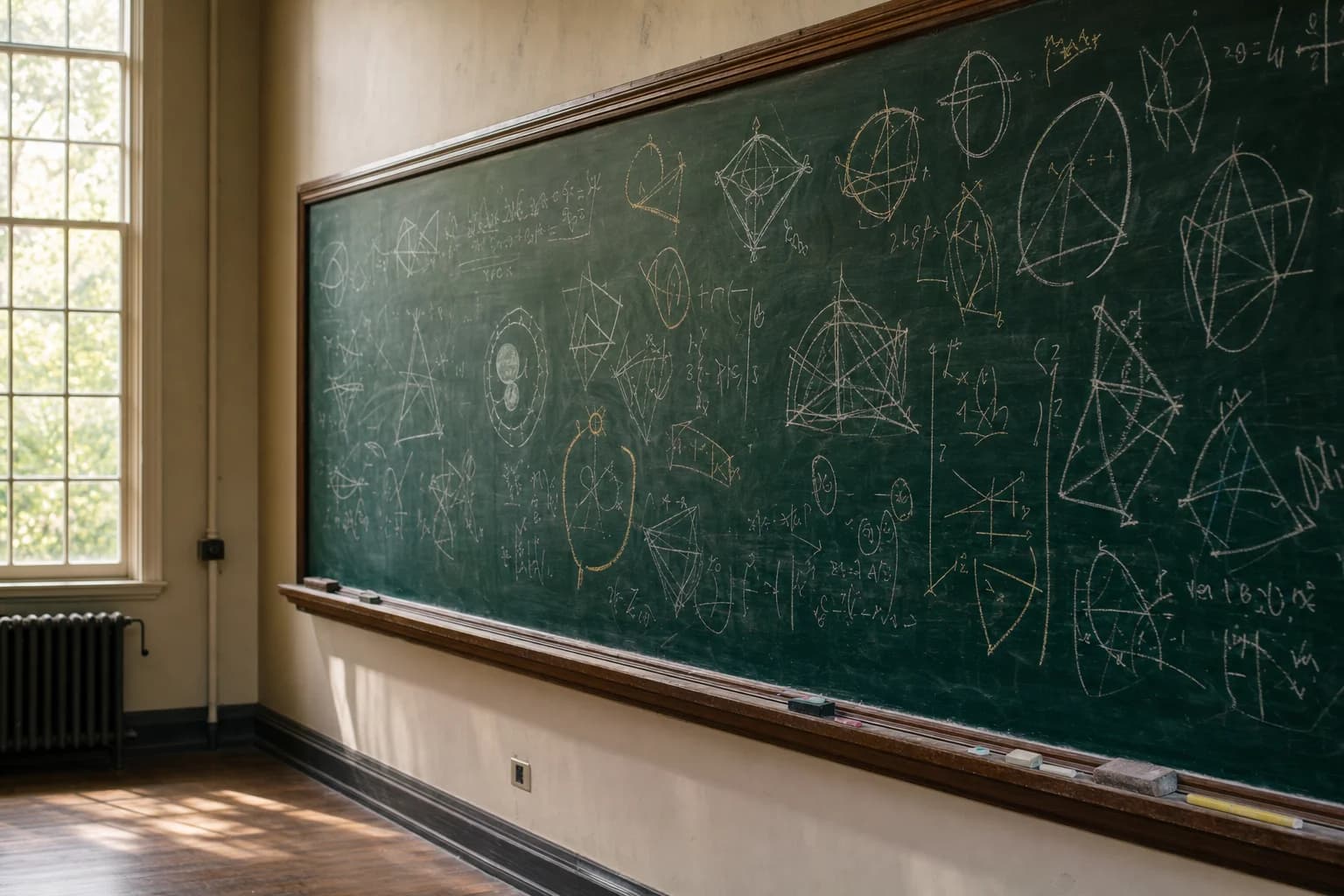
OpenAI previewed its next major model on August 1, 2026, and the announcement did not come with a demo video or a benchmark table. It came with mathematics. The model, tentatively named Astra, is a multi-agent system that OpenAI says solved ten open problems in mathematics and theoretical computer science, each of which had resisted human mathematicians for at least a decade.
Astra solved the ten problems at a total compute cost of roughly $2,000 at API rates, and every proof was formalized in the Lean proof assistant so that its correctness can be checked by machine rather than taken on trust.
This page explains what Astra is, what it actually did, and what is still unknown about it.
What is OpenAI Astra?
Astra is a research-stage multi-agent AI system from OpenAI. Instead of answering a prompt in a single pass, a root agent breaks a problem into pieces, creates subagents to work on those pieces, waits for their results, and synthesizes a final answer. The design is built for long-horizon work: a single objective can run for hours or days.
That architecture is the real announcement. Frontier models until now have competed on how well one model answers in one sitting. Astra is best understood as a coordination layer rather than a bigger brain: its headline capability is managing a team of AI agents over days, not answering a question in seconds.
Sam Altman demonstrated the system to policymakers in Washington, D.C., in early August, and OpenAI followed the preview with a paper and machine-checkable proofs on August 6, 2026.
What math problems did Astra solve?
OpenAI says an internal version of Astra produced solutions to ten open problems spanning group theory, coding theory, quantum complexity, high-dimensional geometry, lattice cryptography, and extremal combinatorics. All ten had been open for at least a decade, most of them much longer.
The standout result is in group theory: a construction proving that non-sofic groups exist. Whether every group is sofic was a question posed by the mathematician Mikhail Gromov in 1999, and it had remained open ever since. Resolving it is a genuine research contribution, not a benchmark score.
Two details separate this from earlier "AI does math" headlines:
- The proofs are machine-checkable. Each argument was formalized in Lean, a proof assistant that verifies every logical step. A Lean-certified proof does not depend on anyone trusting the model; it can be re-run and checked independently.
- Human researchers wrote the papers. OpenAI has been explicit that the model produced the mathematical arguments while humans handled authorship and exposition, and it published a walkthrough of the model's reasoning alongside the results.
Outside mathematicians took the results seriously. Thomas Bloom of the University of Manchester called the batch "big news," judging it potentially more significant than the widely discussed AI-generated counterexample to the unit distance conjecture earlier in 2026.
Is Astra GPT-6?
Not yet, and possibly never under that name. OpenAI has not decided whether Astra ships as GPT-6 or as a variant within the GPT-5 line, and "Astra" itself is described as a tentative name for the model class. What is clear is that OpenAI is positioning it as its next major model family rather than an incremental update.
When will Astra be released?
Astra has not been released. The system that solved the ten problems is an internal research version, and OpenAI has announced no release date, pricing, or API availability. It is in testing, and OpenAI has signaled that a public release would land under the United States' new federal AI framework.
What does "sofic group" mean, and why did Gromov's question matter?
A group, in mathematics, is the formal structure behind symmetry: the rotations of a cube, the shuffles of a deck, the ways a molecule can be rearranged without changing what it is. A group is called sofic if it can be approximated, arbitrarily well, by finite permutations. Soficity became one of the central organizing questions of modern group theory because a remarkable number of hard conjectures are already proven for sofic groups. If every group were sofic, those conjectures would hold universally.
Mikhail Gromov posed the question in 1999: is every group sofic? For twenty-seven years nobody could produce a group that fails the condition. Astra's construction of a non-sofic group answers the question in the negative, and it does so constructively, with an object mathematicians can now study. It simultaneously closes one question and opens a research program: the conjectures that were proven "for all sofic groups" now genuinely exclude something.
How Astra compares with earlier AI math results
AI systems have produced mathematical results before, and the differences are instructive:
- DeepMind's AlphaProof and AlphaGeometry (2024) reached silver-medal level on International Mathematical Olympiad problems. Olympiad problems are hard, but they are problems with known answers, designed to be solved in hours.
- The unit distance conjecture counterexample (May 2026) showed an AI system refuting a standing conjecture, a genuine research first that Thomas Bloom used as his point of comparison.
- Astra (August 2026) is a different claim in kind: ten independent open problems across six fields, solved by one system, with every proof Lean-certified. Research mathematics, batch-processed.
The trajectory across those three data points, from competition math to a single counterexample to a portfolio of open problems in one release, is compressed into roughly two years.
The multi-agent design, in practical terms
OpenAI has not published Astra's architecture in detail, and that gap is worth being explicit about. What it has described is the operating loop: a root agent receives the objective, decomposes it, spawns subagents for the parts, and integrates what comes back, iterating over hours or days.
The practical consequence is that Astra's unit of work is not a chat turn but a campaign. Today's frontier models are stateless between requests unless a developer builds scaffolding around them; the orchestration that research teams currently hand-build with agent frameworks is, in Astra, the product itself. That also reframes the cost question. A $2,000 bill for ten solved problems only makes sense if the system can run unattended for days without a human steering each step, which is precisely the capability OpenAI is claiming.
A timeline of the Astra announcement
- August 1, 2026 — OpenAI previews its next major model, tentatively named Astra, and the first reports describe the ten solved problems. Sam Altman demonstrates the system to policymakers in Washington, D.C.
- August 6, 2026 — OpenAI publishes the paper, the Lean formalizations, and a walkthrough of the model's reasoning, making the proofs independently checkable.
- Unannounced — public release, pricing, API access, and whether the model class ships as GPT-6, a GPT-5.x variant, or under the Astra name.
Why the $2,000 figure matters
The economics are the most quietly radical part of the announcement. Roughly $2,000 of API-rate compute, spread across ten problems, bought results that had eluded funded research groups for ten to twenty-five years. If that ratio holds beyond mathematics, the cost of a unit of frontier research collapses, and the bottleneck shifts from talent-hours to problem selection.
Mathematics is also the ideal first domain for a claim like this, because Lean verification removes the usual doubt about AI-generated work. A hallucinated proof does not compile. Fields without machine-checkable ground truth, from biology to economics, will be much harder to certify the same way.
Quick answers
Who made Astra? OpenAI. It is described as the company's next major model family, distinct from an incremental GPT-5 update.
What did Astra actually solve? Ten open problems in mathematics and theoretical computer science, each unsolved for at least a decade, across group theory, coding theory, quantum complexity, high-dimensional geometry, lattice cryptography, and extremal combinatorics.
What is the most important single result? A construction proving that non-sofic groups exist, answering a question Mikhail Gromov posed in 1999.
How much did it cost? Roughly $2,000 in total at API rates for all ten solutions, per OpenAI's figures.
How do we know the proofs are correct? Every proof was formalized in the Lean proof assistant, so correctness is machine-checked rather than dependent on trusting the model or its authors.
Can I use Astra? No. It is an internal research system with no announced release date, pricing, or API access.
Is Astra the same as Google's Project Astra? No. Google DeepMind has used the name "Project Astra" for its assistant research prototype since 2024. OpenAI's Astra is an unrelated model class, and the name is described as tentative, which may be one reason it could ship under a different one.
What to watch next
Three open questions will determine whether Astra is a turning point or a well-chosen demo:
- Problem selection. OpenAI chose which problems to attempt. A system that solves ten problems out of an unknown number attempted is a different claim from one that reliably cracks arbitrary open questions.
- Generality. Long-horizon multi-agent coordination is the pitch. Mathematics is the one domain where success is self-certifying; the next credible demonstration will need to survive messier ground truth.
- The name. Whether this ships as GPT-6, a GPT-5.x variant, or a separate Astra product line will say a lot about how OpenAI prices long-running agentic compute.
Sources: reporting by The Decoder and Tech Times; OpenAI's paper and Lean formalizations, published August 6, 2026.