The Most Expensive Buildings on Earth Are Now Data Centers
Meta's Hyperion campus in Louisiana carries a $50 billion construction budget, more than three times Abraj Al-Bait. Why the world's costliest buildings are now built for machines.

Quanlai Li is a guest contributor to Stanford Tech Review. He is the founder of ChatSlide AI and the author of How to Win GEO.
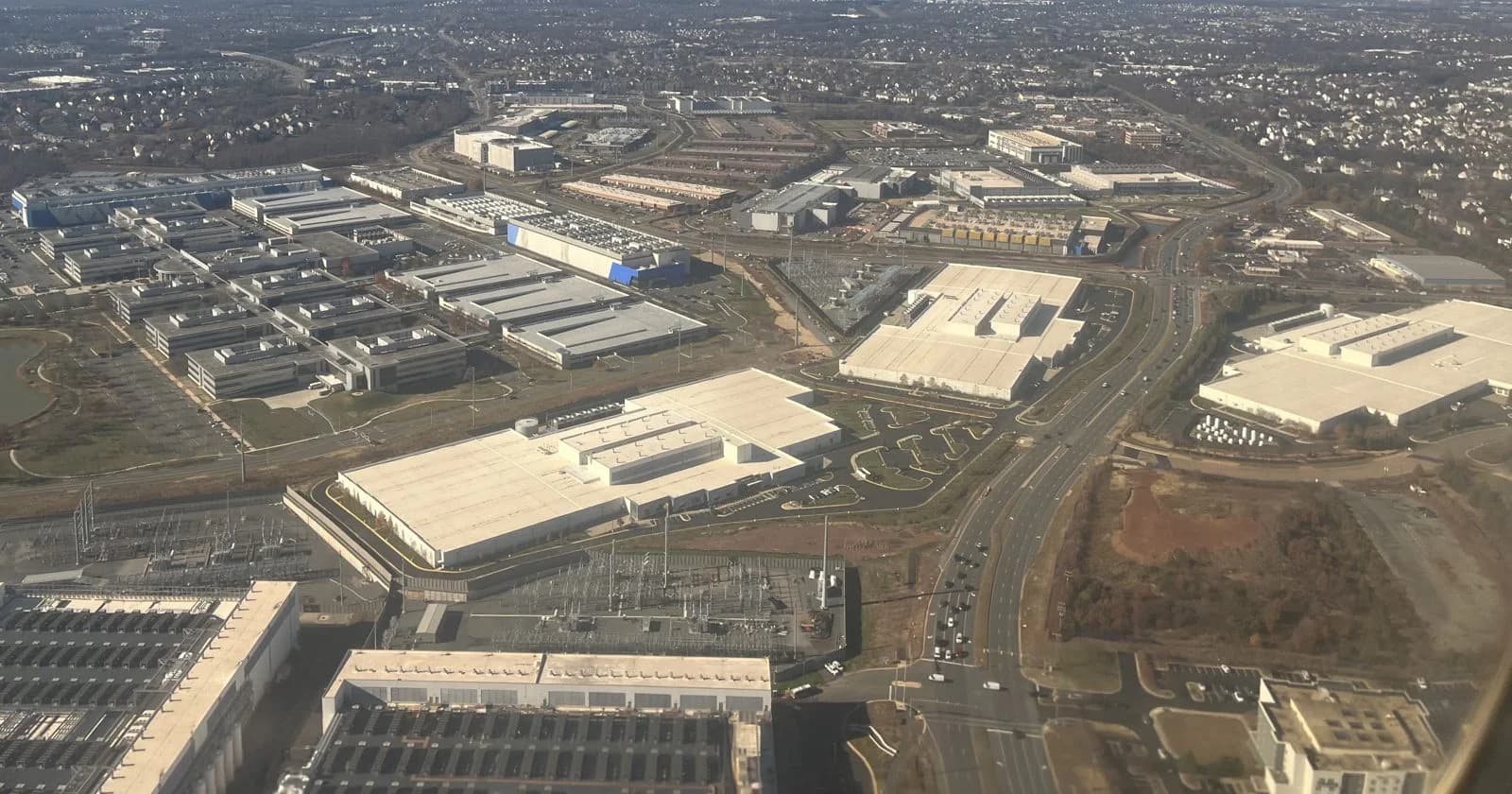
For most of history, the costliest thing a society built told you what it worshipped. Pyramids, cathedrals and palaces gave way, in the modern era, to hotels, casinos, stadiums and glass towers. The record-holder among single structures is still the Abraj Al-Bait complex beside the Grand Mosque in Mecca, at about $15 billion.
That record is about to look small. Meta's Hyperion data center in Louisiana now carries a disclosed construction budget of more than $50 billion. Counting the chips inside, Bloomberg estimates its cost could pass $250 billion. The most expensive buildings on Earth are no longer places where people pray, sleep, gamble, play or work. They are places where machines think.
The leaderboard, redrawn
The old order ran from faith to leisure to commerce: a mosque, a pilgrims' hotel, casino resorts, a stadium, a corporate campus, glass towers. Two AI campuses now sit above all of them except the Grand Mosque's century of expansions, and with its chips Hyperion passes that too.

Abraj Al-Bait beside the minarets of the Grand Mosque, Mecca.
The skyscrapers that once defined ambition, from Shanghai to San Francisco, barely register at this scale.
The new giants
Hyperion's budget has grown fivefold in under two years. It broke ground in December 2024 as a roughly $10 billion project, was revalued at $27 billion in 2025, and passed $50 billion this July when Meta raised its target from 2 to 5 gigawatts. Zuckerberg has compared its eventual footprint to Manhattan; Meta expects 2 GW by 2030 and the full 5 GW around 2032.
It is not alone. Vantage's Frontier campus in Texas and Project Sail in Georgia ($17 billion) sit in the same tier, and SoftBank's Masayoshi Son has described an Ohio project at $500 billion. Across the US, data center construction starts reached $98.5 billion in the first eight months of 2026. The average project now costs $1.18 billion, more than double the 2025 average of $507 million.
Why the rankings haven't caught up
The familiar lists of the world's most expensive buildings still end with casinos and stadiums. Three habits keep data centers off them.
- Campus, not building. A gigawatt campus is many halls across hundreds of acres, so it reads as a development, like Hudson Yards, rather than a single structure.
- Contents, not structure. GPUs are replaced every few years and are booked as equipment, like the machines in a factory. Yet in an AI campus the chips are the reason the building exists, and they cost several times the shell around them.
- The lists are old. Most rankings were compiled before 2024, when a typical data center still cost a few hundred million dollars.

Inside a compute hall: the equipment, not the shell, is most of the bill.
By the strictest definition, one structure and construction cost only, Abraj Al-Bait keeps its title. By any measure of where the world's building money is going, it has already lost it.
What the money says
Each era's most expensive building has been built for people. The pyramid housed a king's afterlife, the cathedral a congregation, the Mecca towers millions of pilgrims, the stadium seventy thousand fans, the tower a city's office workers.
The new record-holders are built for machines. When finished, Hyperion is expected to employ about 1,000 people permanently, in a parish of fewer than 20,000. Its neighbours will notice it less by its crowds than by its appetite: the local utility plans ten gas-fired power plants to feed it.
A society's costliest building has always been a statement of what it believes will last. Ours is a bet that intelligence itself can be manufactured, and that whoever owns the most of it will matter most.
Sources
- eWeek: Meta's Louisiana AI data center could cost over $250B
- AI Business: Cost to build Meta's 5GW Louisiana supercluster hits $50B
- Equipment World: Data center projects to watch in 2026
- HowStuffWorks: Most expensive data centers in the U.S. and China
- Bloomberg Government: SoftBank's Ohio data center
- ConstructConnect: October 2026 Data Center Report
- GOBankingRates: Most expensive buildings in the world
- Homes & Property: Masjid al-Haram tops the list
- Allplan: The 20 most expensive buildings in the world
- List of most expensive buildings (Wikipedia mirror)
- Hospitality ON: Shanghai Tower opens
- Wikipedia: Salesforce Tower
Photos via Wikimedia Commons: Ashburn data centers by Theodore Christopher (CC0); Abraj Al-Bait by EZ (public domain); compute rack, U.S. Department of Energy (public domain).