Unitree IPO Pops 500% While Humanoids Stay in Pilots
Unitree's Shanghai debut valued the humanoid robot maker near $53bn, about 26x the entire global humanoid market's 2026 revenue. What the technology can and cannot yet do.

Nil Ni is a seasoned journalist specializing in emerging technologies and innovation. With a keen eye for detail, Nil brings insightful analysis to Stanford Tech Review, enriching readers’ understanding of the tech landscape.
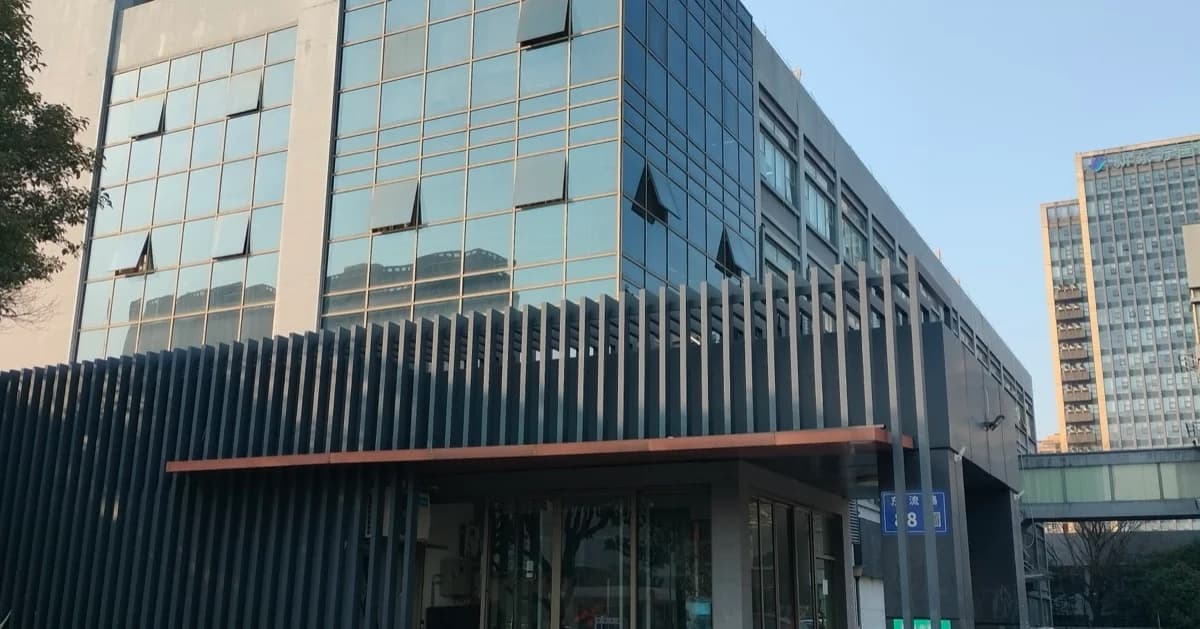
Unitree Robotics, the Hangzhou company whose backflipping machines have become the default stock footage for "Chinese robotics," listed in Shanghai on Wednesday and immediately became one of the most valuable robotics companies on earth. The stock opened roughly six times its issue price and traded up close to 500 percent in the morning session, touching a gain of 629 percent at the intraday peak, according to reporting by The New York Times. That put the market capitalisation near 360 billion yuan, about 53 billion US dollars.
The company priced its IPO earlier in August at 150.80 yuan a share, raising about 6.1 billion yuan (roughly 900 million dollars) at a valuation near 60.3 billion yuan, or about 9 billion dollars. By lunchtime on day one, the market had added roughly 44 billion dollars to that number without a single new robot being sold.
The interesting question is not whether that is expensive. It is. The interesting question is what, technically, investors think they are buying, because the gap between what humanoid robots can currently do and what the valuation implies is the widest it has been in the field's short commercial history.
What Unitree actually built
Unitree's engineering reputation is earned, and it rests on a specific achievement: it made high-performance legged locomotion cheap. Quadrupeds that cost six figures a decade ago became four-figure products. The company's humanoids do kung fu forms, climb walls and land backflips in videos that have drawn millions of views, and those demonstrations are not fake. Dynamic balance on legs, over uneven ground, with recovery from a shove, is a genuinely hard control problem, and Unitree solved a version of it at a hardware price nobody else matched.
That is the good news and it is also the ceiling. The humanoid sector has largely solved locomotion and has not yet solved work. Walking, balancing and tumbling are closed-loop control problems with well-defined objectives and abundant simulation data. Picking an unfamiliar part out of a bin under changing light, deciding it is the wrong part, and putting it back is a perception-and-reasoning problem, and the field is nowhere near a general answer to it.
This is why, as the Times notes, most humanoids inside factories are still in pilot programmes rather than production deployment. A pilot is not a euphemism for failure. It is a real stage of industrial adoption, and it is where a technology sits while the buyer works out cycle time, mean time between failures, safety certification and what happens on the third shift when nobody technical is on the floor. But pilots convert to fleets slowly, and they convert on economics, not on demos.
The revenue tells you where the market is
Unitree's 2025 revenue was roughly 250 million dollars. Sales grew more than fourfold and, unusually for a robotics company at this stage, the business was profitable. Those are strong numbers for a hardware startup. They are small numbers for a company valued at 53 billion dollars.
Put the scale in one line: Unitree's day-one valuation of about 53 billion dollars is roughly 26 times the estimated total global revenue of the entire humanoid robot market this year, which CLSA puts at about 2 billion dollars. The investment research firm forecasts that market reaching 69 billion dollars by 2030. Even if that forecast lands exactly, and even if Unitree captured a quarter of the entire global market by 2030, the company would be generating around 17 billion dollars of revenue against a valuation it already holds today.
Where does the current 250 million actually come from? Predominantly research labs, universities, film and event production, security and inspection contractors, and defence-adjacent buyers of quadrupeds. That is a healthy business with a real moat in cost engineering. It is not the general-purpose labour market that the humanoid narrative is priced against.
The technical gate nobody can schedule
The bottleneck between the two is manipulation. A humanoid that walks well and cannot reliably grasp, orient and place arbitrary objects is a mobile camera platform with legs. The field's current bet is that vision-language-action models will do for manipulation what large models did for language: absorb enough demonstration data that general competence emerges.
It may work. But the data situation is not comparable. Text was already on the internet in the trillions of tokens. Robot manipulation data has to be physically generated, either through teleoperation at human speed or through simulation whose physics does not transfer cleanly to contact-rich tasks. Every serious lab is working the problem from both ends, and progress has been real over the last two years. Nobody can tell you the year it converges, which is precisely the property that makes it a bad input to a discounted cash flow model.
There is a second gate that gets less attention: reliability. An industrial robot arm is expected to run for tens of thousands of hours between failures. A humanoid has dozens of actuated joints, each a wear item, operating under dynamic load, and every one of them is a maintenance event. The first company to publish credible MTBF numbers for a humanoid working an eight-hour shift will have done more to justify the sector's valuations than any demo video.
Policy is now a hardware spec
The technical risks are the ones engineers argue about. The one that appeared in Unitree's own IPO filing is political. Last month the Federal Communications Commission announced plans to bar imports of new foreign-made humanoid and quadruped robots on national security grounds, and Unitree warned in its prospectus that its new models could be blocked from the US market. American buyers accounted for 13 percent of sales last year.
Thirteen percent is survivable as a revenue hit. What it signals is more consequential: legged robots are now treated as a category with sensors, connectivity and autonomy that a government wants to control at the border, the way it treats network equipment and drones. That fragments the market. A company that would otherwise amortise R&D across one global product line now faces the prospect of regional variants, regional supply chains and regional certification, which is a direct tax on the cost advantage Unitree built its business on.
For anyone tracking the sector's technology rather than its share price, that is the development worth watching. Export control does not slow a technology down. It duplicates it, and duplicated development is slower and more expensive than the alternative on both sides of the line.
The pattern from CXMT
Unitree's debut follows a nearly identical one. Less than a month earlier, memory chipmaker CXMT rose 470 percent on its first trading day and has climbed further since, reaching a market capitalisation around 545 billion dollars and overtaking Tencent as China's most valuable listed company. As Su Lian Jye, an analyst at Omdia in Singapore, told the Times, Unitree has strong fundamentals and outstanding technology, but the first session showed a great deal of speculative optimism, partly because Chinese retail investors are willing to buy at almost any price.
Both listings represent the same trade: a domestic market with limited liquid ways to own a strategic AI theme, meeting a supply of shares small enough that price discovery on day one is close to meaningless. CXMT at least sells a commodity with observable global demand and measurable capacity. Unitree sells into a market that mostly has not been built yet.
None of this makes Unitree a bad company. On the evidence it is the best hardware operation in its category, profitable, growing fast, and led by engineers who ship. It is simply being asked, at 53 billion dollars, to deliver an industry rather than a product line. The engineering that gets it there has not been demonstrated yet by anyone, in Hangzhou or in California.
Cover photo: Unitree Robotics headquarters, Hangzhou. Image released into the public domain (CC0) via Wikimedia Commons.
Reporting on Unitree's trading debut and IPO terms: Steve Lohr, The New York Times, August 2026.