AI News This Week: GPT-6 Astra, iPhone Duo, $6B in Funding
The biggest AI news of the week of September 8, 2026: GPT-6 Astra, Atlas, DeepSeek V4.1-Flash, the iPhone Duo, $6.05B in funding, and a very public AGI argument.
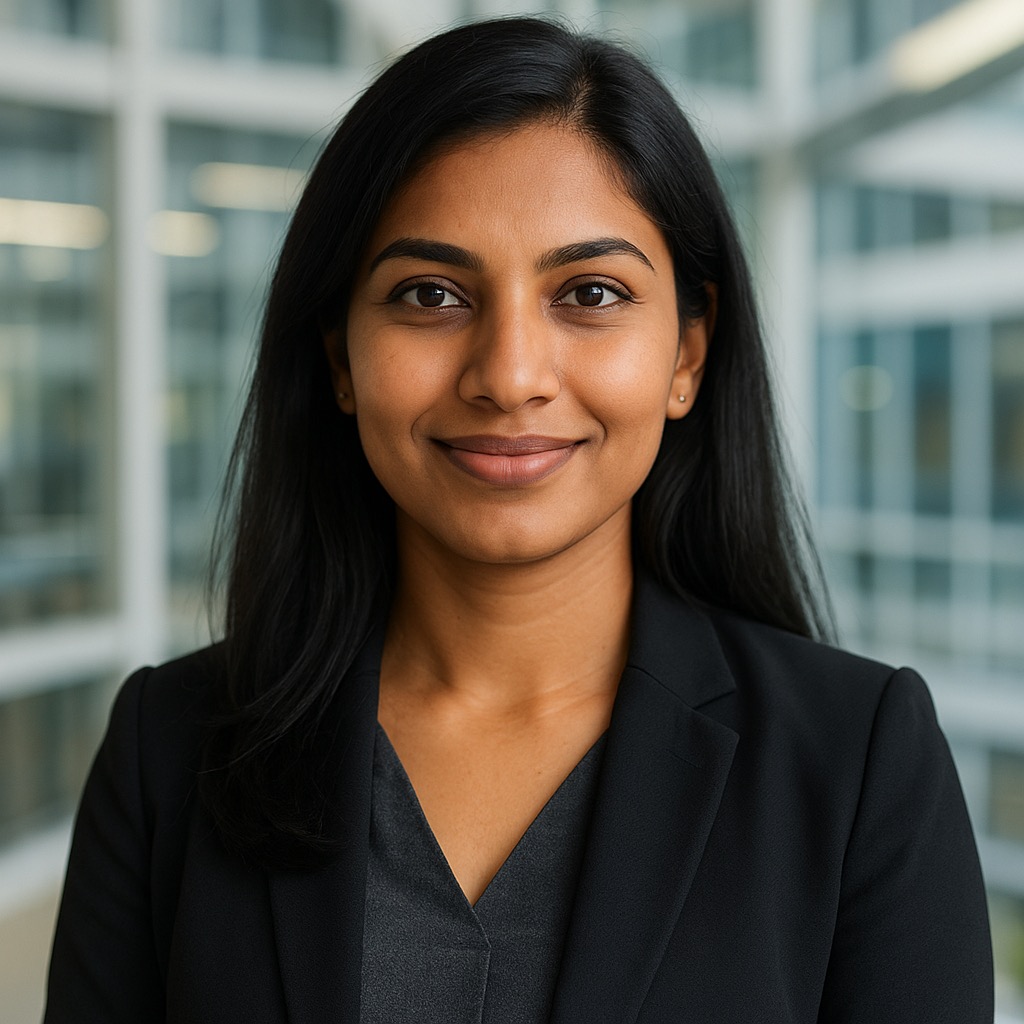
Amara Singh is a seasoned technology journalist with a background in computer science from the Indian Institute of Technology. She has covered AI and machine learning trends across Asia and Silicon Valley for over a decade.

If you stepped away from the news for even a few days, you missed one of the densest stretches the AI industry has produced all year. Between September 1 and September 10, 2026, the industry shipped three major model releases, closed three funding rounds worth a combined $6.05 billion, crowned a foldable iPhone, finished the largest brain map in history, and staged a public argument about whether AGI has arrived — all while one of the researchers building these systems quit and told 76 million people the labs are "gambling with our lives."
Here is what happened, why it matters, and what the numbers say when you put them side by side.
Three model releases in ten days
OpenAI shipped GPT-6 Astra. The company released GPT-6 Astra to approved users on September 3, with general availability the next day. OpenAI calls it "the most capable model we have ever broadly deployed," and it is the company's first model to reach the Critical level for cybersecurity capability under its Preparedness Framework — which is why the cyber-sensitive capabilities sit behind a trusted-access program and the public version rejects certain prompts outright. Pricing lands at $10 per million input tokens and $50 per million output tokens, with a 1,050,000-token context window, per CNBC's launch coverage.
Fei-Fei Li's World Labs debuted Atlas. On September 1, World Labs introduced Atlas, which it describes as the first multimodal world model to unify pixel generation and 3D reconstruction. Atlas builds persistent, explorable 3D scenes from a single photo, generates 1440p video up to a minute long along a chosen camera path, and outputs depth maps, point clouds, and Gaussian splats from the same spatial representation. Human raters preferred Atlas over rival video models in 75 to 94 percent of trials, depending on the competitor. It is in early access behind a request form — no pricing, no API date.
DeepSeek answered with V4.1-Flash. On September 10, DeepSeek released V4.1-Flash, a 552-billion-parameter mixture-of-experts model that keeps just 8 billion parameters active during prompt processing and 16 billion during generation. Third-party tests put the open-weight model ahead of DeepSeek's own flagship V4-Pro on performance, cost, and speed, scoring 90.6 on Terminal-Bench 2.1. The headline is the price: off-peak cached input costs $0.003 per million tokens — three-thousandths of a dollar — against GPT-6 Astra's $10. The two models sit at opposite ends of a pricing spread that now covers more than three orders of magnitude.
The money: $6.05 billion in 48 hours
Three funding rounds were announced on September 8 and 9. Summing the disclosed round sizes from the companies' own announcements and lead press reports, investors committed $6.05 billion across the three deals, at a combined post-money valuation of $87.5 billion.
| Company | What it does | Round | Raised | Valuation | Prior valuation |
|---|---|---|---|---|---|
| Cognition | AI coding agents (Devin) | Series E | $2.0B | $48B | $26B (May 2026) |
| Mistral AI | Open and enterprise models | Growth (Samsung-led) | €3B (~$3.5B) | ~$24B | ~$13.8B (Sept 2025) |
| Harvey | Legal AI | Late-stage | $550M | $15.5B | $11B (late 2025) |

The pattern inside the numbers is more interesting than the total. Cognition's valuation nearly doubled in four months, and its run-rate revenue grew from $492 million to almost $900 million over the same stretch. Harvey crossed $400 million in annual recurring revenue and roughly doubled its valuation in nine months — and is spending the new capital to train its own models rather than rent OpenAI's and Anthropic's. Mistral's round, jointly led by Samsung Electronics, PSG Equity, and the EU-backed Scaleup Europe Fund, is the largest equity raise by a private European tech company ever. None of these are foundation-model land grabs; two of the three are application-layer companies whose revenue is growing faster than their valuations.
Apple folds
At its September 9 event, Apple's new CEO John Ternus unveiled the iPhone Duo, the company's first foldable iPhone: a 5.4-inch outer display opening to a 7.6-inch inner screen, a titanium frame, an IP68 rating, and — opened — the thinnest iPhone ever made. It starts at $1,999 for 256GB, with preorders beginning October 16 and availability on October 23. Apple is entering the foldable category seven years after Samsung, and it is doing so at a price that positions the Duo as a laptop-class purchase.
The largest brain map ever built
On September 3, Google Research and HHMI Janelia published the complete connectome of the male fruit fly — over 166,000 neurons and roughly 125 million synaptic connections across the brain, both optic lobes, and the ventral nerve cord. It is the largest brain map completed to date and the product of a decade of work. Within days, engineers had wired the simulated fly brain up to play Doom and Super Mario 64, which says as much about the dataset's accessibility as it does about the internet.
AGI declared, AGI doubted, misuse documented
The week's strangest thread was rhetorical. On September 6, Nvidia CEO Jensen Huang declared that "AGI has arrived," crediting GPT-6 Astra's training run on more than 100,000 Grace Blackwell GPUs — with 400,000 more coming online. The ARC Prize benchmark's co-founder publicly disagreed, saying the evidence is not there yet, and markets shrugged.
Three days later, Anthropic researcher Jacob Coxon — a 27-year-old who spent three years doing pretraining research at OpenAI and then Anthropic — resigned and posted a seven-part warning that drew nearly 76 million views overnight. Coxon told the Wall Street Journal and TechCrunch that the labs are "racing straight to self-improving superintelligence and gambling with our lives," and that colleagues now casually use the words "crunchtime" and "endgame." Anthropic alignment lead Evan Hubinger publicly said Coxon was correct.
The next day, Anthropic published its September 2026 threat intelligence report, documenting misuse it disrupted between December 2025 and August 2026 across seven harm areas — including a Russia-linked espionage campaign, an automated fake-news operation in Bangladesh, surveillance systems built to identify dissidents, and attempts to use Claude for research involving viruses and toxins. The report's core finding: misuse is shifting from prompt-level assistance to agentic execution, where the model runs the operation rather than advising on it.
Put those three events together and you get the week's real story. The same seven days produced the loudest AGI claim yet made by a major CEO, the most-viewed safety resignation in the industry's history, and $6.05 billion in fresh funding — capital, so far, is treating the warnings as background noise.
Tools kept shipping anyway
Away from the frontier-lab drama, the application layer had its own release week. ChatSlide's AI presentation maker shipped ChatSlide 3.0, a release aimed at researchers and educators whose headline feature is citation-preserving slide generation — sources attached to a document survive into the generated deck instead of being stripped out, which matters to exactly the academic users who could never use slide generators before. It is a small release next to GPT-6, but it is the kind that suggests where the value actually accrues while the frontier argues about endgames.
The week at a glance
| Date | Event |
|---|---|
| Sept 1 | World Labs (Fei-Fei Li) debuts Atlas world model |
| Sept 3 | OpenAI releases GPT-6 Astra to approved users |
| Sept 3 | Google/Janelia publish complete male fruit fly connectome |
| Sept 6 | Jensen Huang declares "AGI has arrived" |
| Sept 8 | Cognition raises $2B at $48B; Mistral raises €3B at ~$24B |
| Sept 9 | Harvey raises $550M at $15.5B; Apple unveils iPhone Duo; Jacob Coxon resigns from Anthropic with viral warning |
| Sept 10 | DeepSeek releases V4.1-Flash; Anthropic publishes threat intelligence report; ChatSlide 3.0 launches |
Weeks like this used to be years. The distance between "AGI has arrived" and "we are gambling with our lives" is now about 72 hours of news cycle — and the money, the hardware, and the tools are not waiting for either claim to resolve.
Method note: the $6.05B and $87.5B figures are the sum of disclosed round sizes and reported post-money valuations for the Cognition, Mistral, and Harvey rounds announced September 8–9, 2026, taken from company announcements and lead press reports linked above; Mistral's €3B round is converted at the ~$3.5B figure its coverage used.