California Data Centers Energy Demand and Grid Stress
Explore a data-driven perspective on California data centers, focusing on energy demand and its significant implications for grid stress.

Stanford Tech Review editorial desk.
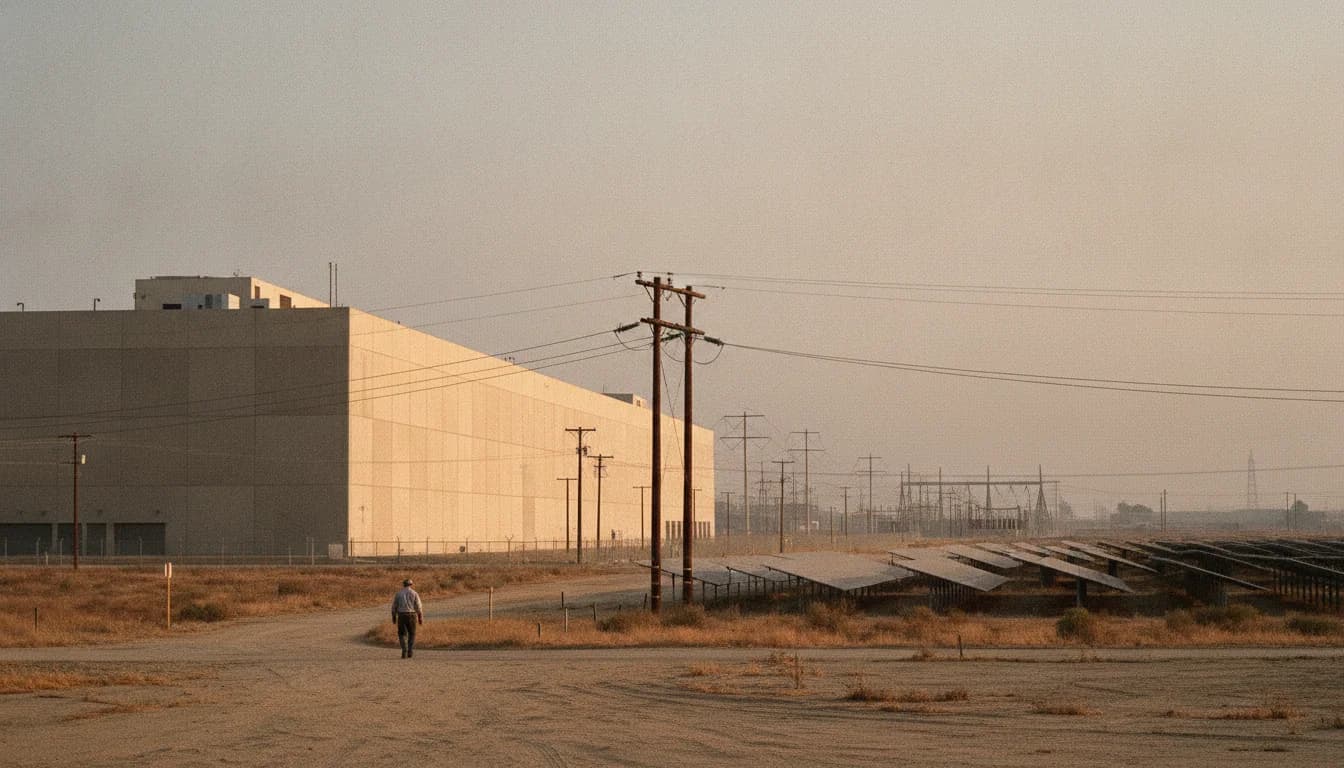
California data centers energy demand and grid stress are no longer a peripheral concern for policymakers or grid operators. The rapid growth of hyperscale facilities, colocation campuses, and edge deployments has transformed data centers from a back-office IT topic into a driver of electricity demand, reliability planning, and policy design. This perspective argues that California data centers energy demand is not a static, negligible load but a dynamic signal for how the state can align technology progress with a reliable, decarbonized grid. The analysis builds from current planning forecasts, grid integration research, and real-world demand-response experiments to propose a pathway where data centers become active, flexible participants in California’s energy transition.
According to the California Energy Commission, California data centers energy demand reached about 1,000 MW in early 2026, representing roughly 2% of the California ISO's peak electricity demand. This figure, grounded in the state’s Planning Forecast, provides a concrete anchor for the discussion and a starting point for evaluating the broader implications of data center growth on grid stability and policy design. California Energy Commission data centers page (energy.ca.gov)
The question at hand is not merely how big data centers are today, but how California can harness the growth of this sector to support a cleaner, more flexible electricity system. The opening argument here is intentional: California data centers energy demand is a test case for grid resilience, demand flexibility, and policy clarity. If we can design markets, incentives, and infrastructure that recognize data centers as potential grid allies—rather than as unyielding loads—the state can accelerate climate goals while keeping power reliable and affordable for customers across the state.
The Current State
A growing, not static load
Early 2020s projections consistently treated data centers as a rising but manageable demand block. The California energy planning framework, including the California Energy Demand forecast and the Integrated Energy Policy Report, has repeatedly highlighted data center loads as a significant regional consideration rather than a marginal blip. In practice, this means recognizing that the energy footprint of digital infrastructure is not fixed; it shifts with workloads, cooling strategies, and policy incentives. The public discourse often emphasizes either the growth of these facilities or the decarbonization of their energy supply, but the real story is how load shape changes over time with technology and policy.
The California Energy Commission’s monitoring and planning efforts show that data centers have become a sizable, regulated load that utilities and regulators must model explicitly. As of early 2026, data centers account for roughly 1,000 MW of demand, about 2% of California ISO’s peak electricity demand, a figure derived from the state’s Planning Forecast and integrated into IEPR considerations. This framing situates data centers as a material factor in both near-term grid operations and long-term resource planning. For context, major planning documents (including the IEPR and associated demand forecasts) illustrate the role of large loads in shaping reliability metrics and capacity planning for California’s diverse energy landscape. [California Energy Demand Forecast and IEPR context] (energy.ca.gov)
What people think versus what the data show
Public perception often casts data centers as “the power-hungry data backbone,” yet the scale often appears smaller in broad energy debates compared with transportation, industrial, or residential electricity use. In California, the narrative frequently centers on ambitious renewables targets and the need for upgraded transmission; data centers are sometimes treated as a secondary consideration in that mix. The divergence between perception and the data becomes most evident when you look at planning documents that quantify loads and when you examine how much flexibility exists within these facilities to participate in grid services. The scale of 1,000 MW is substantial in a state with a highly dynamic energy system, and it implies both opportunities and challenges for grid operators and policymakers. The California Energy Commission’s published numbers frame the issue with specificity, and they underscore the importance of designing programs that reflect real-world load patterns and potential flexibility. [CEC data centers planning forecast] (energy.ca.gov)
The policy and planning frame
California’s policy and planning environment has increasingly recognized the need to align large-load customers with grid objectives. Demand response, energy efficiency, and smart distribution technologies are core elements of the state’s approach to managing electricity use during peaks and transitions to higher levels of intermittent renewable generation. The CPUC, CAISO, and California Energy Commission all discuss demand-side opportunities, with a growing emphasis on integrating data centers into DR programs, fast-response ancillary services, and rate designs that reward flexibility. The state’s broader policy stance is that smarter electricity use—enabled by voluntary programs and market mechanisms—will be central to an affordable, reliable clean energy transition. This framing is reinforced by state-led studies and program announcements that connect data-center energy management with grid reliability and climate goals. [CPUC Demand Response programs; CAISO DR programs] (cpuc.ca.gov)
Public health, environment, and equity considerations
Beyond grid reliability and cost, California leadership emphasizes the environmental and social dimensions of energy use. Data centers, like other large electricity users, intersect with environmental justice, air quality, and regional development considerations. State agencies discuss the need to ensure that energy efficiency improvements and demand response strategies do not disproportionately burden specific communities or regions while still delivering decarbonization benefits. The DOE/LBNL research ecosystem and the California Energy Commission’s programmatic work provide a framework for evaluating environmental trade-offs, including energy intensity of cooling, upstream emissions, and the potential for on-site generation or low-carbon energy procurement. [LBNL data center efficiency and DR research; CEC program materials] (bies.lbl.gov)
The reliability and market design tension
A persistent theme across planning documents is the tension between reliability needs and market design. As data centers grow, their load factors and ramp characteristics—particularly for cooling systems, on-site equipment, and IT workloads—present opportunities for demand-side participation in wholesale markets, but also raise concerns about reliability if external signals are weak or if participation imposes operational constraints. The California regulatory framework has increasingly explored how data centers could participate in DR, capacity markets, and ancillary services, while safeguarding mission-critical IT operations. Research, policy proposals, and pilot programs have begun to articulate practical pathways for this alignment. [LBNL DR studies; CPUC/CAISO DR programs] (eta-publications.lbl.gov)
Why I Disagree
Data centers can be grid allies, not mere loads
The strongest counterpoint to a view of data centers as passive demand is the growing body of evidence that these facilities can actively participate in grid services without sacrificing reliability or performance. Demand response research sponsored by California energy programs demonstrates that data centers can shift loads, shed non-essential IT tasks, or defer non-urgent processes during grid stress. The latest California DR analyses indicate a credible potential for load flexibility at scale, supported by technology and operational practices that can be deployed across different data-center typologies. This is not a theoretical exercise: pilot programs and modeling efforts have shown measurable energy savings and reduced peak demand when data centers engage in DR. [LBNL DR studies; CA DR programs] (eta-publications.lbl.gov)
"Smarter electricity use through voluntary programs that help Californians better manage energy use is a critical piece of the state's clean energy transition plan." — California Energy Commission, quoted in a 2023–2024 policy briefing. This insight underscores the policy logic for treating data-center flexibility as a legitimate grid resource rather than a mere cost center. [CEC statement] (energy.ca.gov)
The demand-response opportunity is real, not theoretical
The DR potential studies from LBNL and California partners show that data centers can deliver meaningful load reductions when incentivized or scheduled appropriately. The Phase 2 and Phase 3 DR studies, alongside open-automated DR frameworks, detail concrete pathways for data centers to participate in two-way market signals, enabling faster response than many conventional industrial loads. This is a critical counterargument to the belief that data centers’ load is inherently inelastic or inflexible. The practical implication is that policy and market design should explicitly include data centers as a category of DR resources, with standardized technical interfaces and clear compensation mechanisms. [LBNL DR potential studies; Open DR guidance] (connectedcommunities.lbl.gov)
Efficiency gains alone won’t close the gap
Some observers argue that continued efficiency improvements and cooler, smarter data centers will render policy concerns moot. While efficiency improvements—such as advanced economizers, server-level power management, and more efficient cooling architectures—are essential, they do not automatically solve the grid-planning challenge posed by rapid capacity additions. In California, where high renewable penetration and complex transmission dynamics shape reliability, relying on efficiency alone risks creating a mismatch between load growth and grid readiness. This is why the policy emphasis on demand flexibility, rather than relying solely on efficiency, is a critical, evidence-based corrective. See the state’s energy-efficiency roadmaps and DR-focused research for context. [LBNL energy-efficiency research; CA-CEC efficiency studies] (bies.lbl.gov)
Localized effects and the distribution question
A potential counterargument is that California’s data centers are dispersed and that their regional impacts average out at the state level. However, the load growth is not uniformly distributed, and some regions may face outsized interconnection or transmission constraints as new data-center interconnections come online. The California CPUC and CAISO materials emphasize the need for interconnection planning, grid-scale flexibility, and fair rate design to avoid siphoning away grid reliability to a few regions while others carry rising risk. The modeling and regulatory materials from CPUC and ISO illustrate a clear need for targeted, region-specific policy instruments to ensure reliability. [CPUC/CAISO interconnection and DR policy materials] (caiso.com)
The “growth equals doom” narrative is incomplete
The public debate sometimes frames data centers purely as growth-driven threats to the grid. The balanced view, grounded in data and program experience, is that growth can be managed through deliberate design of DR programs, energy-efficiency incentives, and smarter interconnection policies. If policymakers adopt a framework that treats data centers as flexible resources rather than fixed loads, the risk of grid instability can decrease while accelerating digital infrastructure growth. This is not optimistic fantasy; it is a data-informed stance supported by multiple lines of evidence from state and national research programs. [CEC/DOE/LBNL studies on DR and efficiency] (energy.ca.gov)
What This Means
Implications for policy and planning
Recognize data centers as active participants in grid flexibility. Policy should create and reward participation in DR and ancillary-service programs, with robust measurement and verification, clear compensation, and protections for mission-critical operations. The California ISO and CPUC DR programs provide a framework to operationalize this idea, while ensuring reliability is not compromised. [CAISO DR programs; CPUC DR programs] (caiso.com)
Expand data-center energy benchmarking and public reporting to improve transparency and planning accuracy. The Building Energy Benchmarking Program, coupled with annual disclosures for large facilities, can provide the data needed for more precise load forecasting and targeted grid investments. This aligns with the state’s broader emphasis on data-driven policy. [CEC data centers page] (energy.ca.gov)
Invest in demand-side research and pilots that translate DR potential into scalable, bankable programs. The DR potential studies from LBNL, along with California stakeholder engagement, show a credible path to escalate data-center DR from pilot to a standard element of resource adequacy planning. [LBNL DR studies; Phase 3 DR study] (connectedcommunities.lbl.gov)
Operational and market design changes
Incentivize behind-the-meter flexibility with transparent pricing and grid-supportive automation. Data centers can adjust cooling setpoints, workload scheduling, or IT batch processing during peak periods in exchange for favorable rate signals or DR payments. The 2024 CEC project and related DR research demonstrate that such changes can yield significant energy-cost reductions and emissions benefits if implemented thoughtfully. [CEC project outcomes; DR research] (energy.ca.gov)
Foster standardized interfaces for DR participation across data-center types. Multitenant and hyperscale facilities have distinct operational profiles; a standardized DR framework helps ensure reliability while enabling scale. The DR literature and California policy materials point to the value of standardized control architectures and market participation rules. [Open-DR guidance; Phase 2/3 studies] (eta-publications.lbl.gov)
Support cleaner energy procurement alongside flexibility. While DR improves reliability and reduces peak demand, pairing data-center growth with aggressive decarbonization of electricity supply—through renewables, storage, and green procurement—remains essential. State planning documents explicitly connect energy-demand management with decarbonization objectives, reinforcing the need for a holistic approach. [IEPR and energy planning documents] (energy.ca.gov)
Industry actions and investment priorities
Build resilience through on-site and regional energy strategies. Data-center operators can invest in on-site generation, energy storage, and advanced cooling to reduce peak dependence on grid availability, especially during extreme weather or transmission constraints. California’s programmatic work on demand response and energy efficiency supports these investments, while highlighting the potential for emissions reductions and cost savings. [CEC DR/efficiency programs; on-site generation research] (energy.ca.gov)
Embrace grid-agnostic planning with flexible IT workloads. The data-center industry is increasingly exploring workload distribution and optimization to respond to energy-price signals and grid conditions. This aligns with broader research on energy-aware scheduling and cooling, promising both cost and emissions benefits. [ArXiv papers on energy-aware scheduling; DR-focused studies] (arxiv.org)
Prioritize transparency and external validation. Public-facing metrics, third-party audits, and independent modeling are essential to sustain trust in the data-center–grid nexus. The state’s emphasis on independent forecasting and public reporting helps ensure that policy and industry actions remain data-driven and defensible. [CEC and CPUC publications; DOE/LBNL reports] (energy.ca.gov)
Closing
A thoughtful, data-driven view of California data centers energy demand is not about resisting growth or slowing innovation. It is about designing a policy and market architecture that treats these facilities as dynamic, potentially grid-supporting resources rather than fixed, unyielding loads. The evidence—from state planning forecasts to DR pilot results—suggests a clear path: unlock flexibility, scale energy-efficiency, and align data-center operations with a renewables-dominated grid. If California can do this, data centers will be less a risk to reliability and more a catalyst for a cheaper, cleaner, and more resilient electricity system.
The future of California data centers energy demand hinges on three moves: (1) formalizing demand response participation as a standard, well-compensated service; (2) accelerating energy-efficiency and advanced cooling research to shrink baseline demand; and (3) integrating data-center flexibility into planning, procurement, and interconnection processes. If these steps are taken, the state can continue to grow its digital economy without compromising grid reliability or affordability for ratepayers. The opportunity is real, and the data supports a path where technology and policy reinforce each other to deliver a more resilient energy future for California.
In short, California data centers energy demand is not only about watts; it is a lens on how to organize a modern, flexible energy economy. By embracing the data-centered opportunity to participate in demand response, improve efficiency, and align with grid needs, California can protect reliability, accelerate decarbonization, and sustain the innovation ecosystem that makes the state a global tech leader.
"Smarter electricity use through voluntary programs that help Californians better manage energy use is a critical piece of the state's clean energy transition plan." — California Energy Commission. This statement captures the principle that data-center flexibility is a policy asset, not a regulatory burden. [California Energy Commission policy brief] (energy.ca.gov)
As we move forward, the call to action is clear: policymakers, utilities, and data-center operators must collaborate to design and implement DR-friendly policies, invest in efficiency and storage, and create transparent, verifiable metrics that demonstrate the grid and digital economy can grow together. The data tell a story of potential rather than peril; it is up to us to translate that potential into practical, scalable programs that bring reliability, affordability, and decarbonization into alignment.