San Jose PG&E Energy Pact Data Centers Power Shift
Explore a data-driven take on the significant San Jose PG&E energy pact for data centers and its vital implications for grid reliability and future growth.

Stanford Tech Review editorial desk.
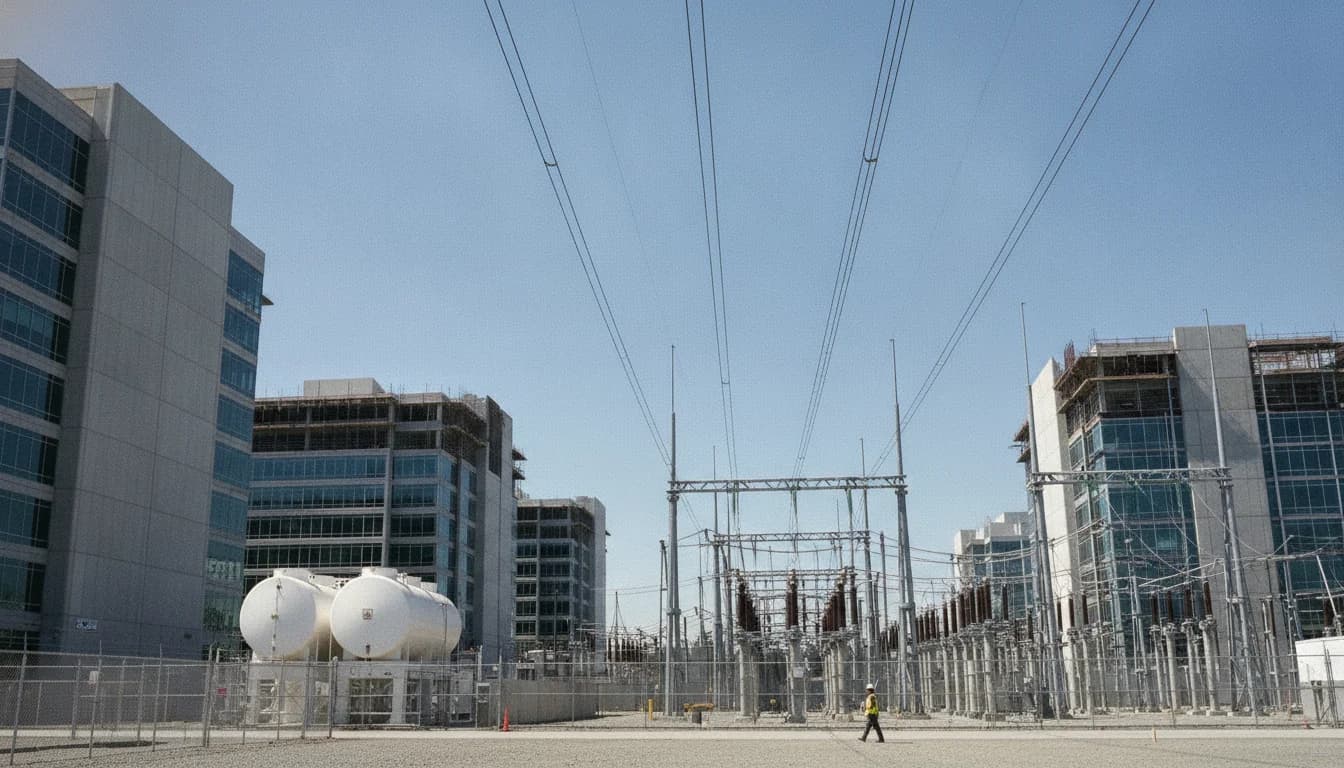
San Jose sits at the confluence of unprecedented data-center demand and an electric grid that is being reimagined for reliability, speed, and scale. The discussions around the San Jose PG&E energy pact data centers are not just about connecting more servers; they are about building a framework where critical infrastructure, local policy, and market incentives align to support sustainable growth without compromising grid stability or ratepayer interests. In a market where every megawatt matters, the capacity to connect large loads quickly—while maintaining performance guarantees—could alter the trajectory of Silicon Valley’s tech economy for a generation. The stakes are higher than ever because data centers are no longer a marginal user of power; they are shaping both the timing and the cost of grid investments, and they are forcing utilities and cities to redefine service standards, interconnection timelines, and reliability targets. This piece argues that the San Jose PG&E energy pact data centers represents a pivotal, data-driven moment in how urban economies scale with hyperscale computing, and it unpack the tradeoffs, risks, and opportunities that come with it.
Central to this narrative is a concrete milestone in the practical reality of energy delivery for large loads. According to PG&E's May 28, 2025 press release, the deployment of Smart Wires' APFC technology will boost capacity by more than 100 MW at the Los Esteros substation to support data centers under development in San Jose. This figure—100+ MW of additional firm capacity—signals a tangible upgrade path for the grid to accommodate rapid data-center growth in the Alviso area, at a moment when planners are weighing near-term versus longer-lead-time capacity investments. This detail matters not just as a number on a slide but as a signal of how grid-enhancement technologies can unlock faster interconnections for large users while keeping safety and reliability at the forefront. [Primary source: PG&E press release, May 28, 2025] [https://investor.pgecorp.com/news-events/press-releases/press-release-details/2025/PGE-and-Smart-Wires-Enhance-Grid-Reliability-Capacity-for-Data-Centers-in-San-Jose/default.aspx?print=1] (investor.pgecorp.com)
The Current State
Regulatory and planning backdrop
The City of San José has framed its engagement with PG&E as a principled attempt to modernize energy delivery for large-scale users, with a particular emphasis on data centers. The city describes the agreement as a historic step to streamline interconnection and ensure power delivery is both timely and accountable, reflecting a broader strategic push to position San José as a premier data-center hub while maintaining grid reliability. This framing appears in the city’s published materials and accompanying press coverage, which emphasize performance milestones, timelines, and oversight mechanisms as core components of the partnership. For readers tracking the governance aspects of this pact, the city’s materials and related coverage outline a formal Implementation Agreement and a pathway for ongoing coordination between the city and PG&E. [City of San José press and coverage: “Historic Agreement with PG&E” and related updates] (sanjoseca.gov)
Market demand and growth forecasts
Several independent analyses and utility planning documents underscore the magnitude of data-center demand in the San Jose region. The California Independent System Operator (CAISO) has projected a substantial load increase in the San Jose area due to data-center growth, estimating up to 500 MW of additional load could materialize as hyperscale facilities expand. This projection creates a pressing need for grid upgrades, new interconnection capacity, and improved operational flexibility to maintain reliable service for both existing customers and new large-load customers. The 500 MW figure appears in official PG&E communications surrounding the data-center growth narrative, illustrating how the grid planning community views the scale of demand in the near term. [PG&E press release; CAISO projection reference in PG&E materials] (investor.pgecorp.com)
Implementation and interconnection process
Beyond the high-level agreement, San José’s governance mechanisms have continued to monitor and guide the PG&E partnership through formal status reports and procedural updates. Recent city and legislative documents show ongoing evaluation of the Implementation Agreement with PG&E, along with grid-infrastructure projects designed to support the anticipated data-center growth. This public-facing process helps ensure that interconnection timelines, reliability obligations, and grid upgrades stay aligned with both developer timelines and community expectations. For a window into the ongoing oversight, see the city’s status reports and related legislative materials. [City of San José Legistar status reports and related materials] (sanjose.legistar.com)
Data center development and grid augmentation in practice
Recent coverage highlights two concrete facets: (1) the practical grid augmentation efforts that aim to increase available capacity at strategic substations near Alviso, and (2) the broader plan to bolster transmission and distribution to support rapid data-center interconnections. A notable project, backed by PG&E and Smart Wires, is expected to add substantial capacity at the Los Esteros substation, improving resilience for new facilities in the Alviso corridor and adding capability to withstand contingencies while feeding a growth trajectory that is already visible in San José’s planning documents. This project aligns with CAISO’s projected demand growth and is part of a broader suite of grid modernization efforts. [PG&E press release; Smart Wires collaboration coverage] (investor.pgecorp.com)
A note on the infrastructure scale
In parallel with localized capacity improvements, industry observers and planners point to anticipated transmission investments that could reshape the region’s electrical backbone. DCD’s coverage of San José’s PG&E deal notes a plan for two high-voltage transmission lines projected to come online by 2028, with the potential to add up to 2 GW of capacity to the local grid. This broader grid expansion is framed as a necessary enabler for the near- and mid-term data-center buildout, reflecting a view that local interconnection speed must be matched by regional transmission readiness to sustain growth without compromising reliability. While the precise timing and cost of these lines remain subject to regulatory and environmental reviews, the high-level takeaway is clear: regional capacity expansion is a core component of supporting San Jose’s data-center ambitions. [Datacenter Dynamics coverage] (datacenterdynamics.com)
The data and the policy intersection
Taken together, these developments depict a policy-technical seam in which San José’s leadership seeks to balance rapid data-center growth with grid reliability, place-based economic benefits, and public accountability. The city’s energy program materials emphasize clean-energy options (such as San Jose Clean Energy) and water-management efficiencies as complementary levers for making large-load growth sustainable. In other words, the San Jose PG&E energy pact data centers narrative is not merely about electricity delivery; it is about how a city combines infrastructure, policy, and market design to turn data-center demand into a catalyst for broader urban resilience and competitiveness. [City materials and program descriptions] (sanjoseca.gov)
What developers and residents should watch
For developers, the central takeaway is that the path to interconnection is being accelerated in a way that ties reliability guarantees to performance milestones. For residents and ratepayers, the critical questions revolve around the long-run implications for electricity pricing, grid investments, and local energy reliability under stress scenarios. In this context, the San Jose PG&E energy pact data centers represents not a single project but a broader shift in how large-load customers are integrated into an evolving grid architecture, where performance standards, upgrade timelines, and cost-sharing models are woven into formal agreements rather than ad hoc negotiations. These structural changes have the potential to set a precedent for other jurisdictions facing similar data-center growth trajectories. [CAISO/policy references; city initiatives] (investor.pgecorp.com)
A counterpoint worth noting
Critics warn that even well-structured pacts can mask longer-term ratepayer risks if capacity additions are deprecated or if the pace of growth outstrips what the grid can reliably sustain without disproportionate investments. A common counterargument centers on the idea that large data-center commitments should be accompanied by explicit, transparent cost-sharing constructs and include contingencies for slower-than-expected progress. The literature and coverage around the San Jose pact show that these tensions exist, and the public-facing materials emphasize accountability and performance milestones to mitigate such concerns. The balance, then, is not simply about building more power lines; it is about creating a governance framework in which reliability, cost, and growth are negotiated in a way that is transparent and verifiable. [Policy analyses and coverage] (datacenterdynamics.com)
The competition and collaboration backdrop
San José sits in a broader ecosystem of utilities, cities, and technology firms that are grappling with the implications of data-center growth for power systems. The San José pact sits alongside other national and regional conversations about how data centers influence electricity markets, grid planning, rate design, and infrastructure investment. Observers point to several macro trends: (a) increasing sophistication of grid-enhancement technologies (such as advanced power flow control devices), (b) heightened interagency coordination between local governments and utilities, and (c) a growing expectation that large-load customers contribute to grid resilience rather than simply consuming power. In this context, the San José energy pact with PG&E provides a real-world case study in how these elements can come together in a highly consequential urban setting. [PG&E partnerships and grid-technology references] (investor.pgecorp.com)
Why I Disagree
Argument 1: Capacity gains do not automatically translate to affordable, stable rates
One central critique is that capacity improvements—while critical—do not inherently guarantee stable or lower electricity costs for ratepayers. The data point often cited in support of favorable rate impacts is PG&E’s claim that “for every 1 GW of new data center demand, other PG&E customers could see their monthly bill fall by 1–2%.” While appealing, this argument rests on several conditional assumptions, including the elasticity of the entire system’s costs, the pace of interconnections, and the degree to which transmission upgrades can be amortized across all customers. The DCD coverage of the San José deal highlights this tension by presenting a case where data-center growth could have both positive and neutral or even negative rate implications depending on timing, capital costs, and the cross-subsidy dynamics that emerge during large-scale grid upgrades. In short, capacity gains are necessary, but they are not a guarantee of lower bills or fully predictable pricing for non-data-center customers. [Datacenter Dynamics analysis; PG&E cost-averaging discussion] (datacenterdynamics.com)
Argument 2: The pace of growth could overwhelm the regulatory and oversight framework
A second concern focuses on governance and oversight. The San José Implementation Agreement is a significant advance in streamlining and guaranteeing power delivery for large-load customers, but it also increases the complexity of regulatory oversight. When two high-voltage transmission lines are planned for 2028 and beyond, the regulatory review, environmental clearance, and local community engagement must keep pace with the deployment schedule to avoid bottlenecks that could delay interconnections or inflate costs. The prospect of multi-year timelines, coupled with the large-scale data-center buildouts, raises the risk that milestones slip or that the cost share shifts to ratepayers if failures occur in procurement or construction. The public records and coverage suggest a deliberate emphasis on milestones and accountability, yet the practical risk remains that the scale of growth could push the regulatory process beyond the speed at which developers can deploy facilities. [DCD coverage; Legistar status materials] (datacenterdynamics.com)
Argument 3: Economic benefits may be uneven and contingent on broader policy design
A third counterargument concerns distributional effects. While San José could gain in terms of tax revenue and job creation, the spillovers for surrounding communities and for residents depend on how benefits are shared and how infrastructure investments are allocated. The City’s own materials reference local fiscal impacts and public benefits, but the growth in tax revenue and the distribution of those benefits hinge on the specifics of valuation, service usage, and timing. If the interconnection program accelerates growth in areas already favored by developers, it may exacerbate urban/edge-area disparities unless deliberate policies are in place to broaden benefits. This is not a forecast about the pact’s outcome; it is a reminder that large-load energy development needs to be coupled with inclusive policies to ensure broad-based gains. [City materials on economic impacts] (sanjoseca.gov)
Argument 4: The environmental and community dimensions require careful integration
The expansion of data centers has environmental implications that extend beyond energy consumption. The city and its partners emphasize renewable options and water-management pathways to mitigate environmental impact, which is essential but not automatically assured in rapidly growing data-center corridors. The San José materials discuss renewable-energy access through local energy options and water recycling, but the real-world realization of these benefits depends on project-specific decisions, supply contracts, and the broader energy mix. Skeptics caution that even with high-level commitments to renewables, the incremental power supply associated with new data centers could shift environmental tradeoffs if not matched with concrete, enforceable standards and near-term actions. The evidence from city and regional planning materials indicates an awareness of these concerns, with ongoing reviews to ensure alignment with environmental objectives. [City materials; sustainability notes] (sanjoseca.gov)
A counterpoint that deserves respect
A final counterpoint is that this pact is not simply a “growth-at-all-costs” lever. Proponents argue that modernizing the grid to support data centers can accelerate broader urban modernization, drive technology adoption, and spur investment in resilient infrastructure that benefits the city’s economy and its citizens. The tension between growth and resilience is real, and the San José approach offers a blueprint for how to navigate it: establish clear performance milestones, anchor upgrades to grid reliability metrics, and incorporate community and environmental safeguards into the contract structure. This is not a guarantee of universal agreement, but it does reflect a deliberate attempt to balance competing priorities in a high-stakes environment. [City and industry coverage] (sanjoseca.gov)
What This Means
Implications for policy design and governance
The San Jose PG&E energy pact data centers case provides tangible lessons for policymakers and utility planners. The most salient implication is the potential value of performance-based agreements that tie reliability, interconnection speed, and upgrade milestones to concrete, measurable targets. This approach reduces ambiguity about who bears risk when timelines slip and ensures that the benefits of grid modernization are assessed against explicit, externally verifiable criteria. It also underscores the importance of public accountability mechanisms—transparent milestone reporting, independent verification, and an explicit framework for cost allocation among ratepayers, developers, and utilities. The May 2025 PG&E press release and the accompanying CAISO projections provide a data-driven backbone for these considerations, illustrating how a forward-looking pact can anchor grid-reliability improvements in a market that is simultaneously expanding. For readers and practitioners seeking to translate this into practice, the core takeaway is that reliability-first contracts with built-in performance obligations can align incentives across multiple stakeholders and shorten the path from planning to operation. [PG&E press release; CAISO projections] (investor.pgecorp.com)
Implications for developers, utilities, and cities
A second set of implications concerns the operational and market design implications for developers, utilities, and municipalities. The partnership signals a shift toward more collaborative, integrated planning where customer growth is matched by targeted grid enhancements and streamlined interconnection processes. For developers, this can materially reduce time-to-connect and improve certainty around capacity, which in turn can accelerate project pipelines and portfolio planning. For utilities, the pact presents a laboratory for deploying advanced grid technologies (such as APFC) and coordinating with independent grid operators to manage congestion and optimize capacity release. For cities, the experience offers a framework for aligning land use policy, energy infrastructure, and economic development goals—demonstrating that urban growth can be pushed forward in a way that strengthens resilience and public finance. These implications align with the broader narrative around data-center-driven growth in San Jose and beyond, where grid readiness and policy alignment are not afterthoughts but central design parameters. [PG&E press release; DCD coverage; City program descriptions] (investor.pgecorp.com)
Long-run strategic consequences for San José and the Bay Area
The pact’s longer-run consequences hinge on how San José and PG&E translate milestones into credible long-term planning. If the 2 GW of planned transmission lines by 2028 come online as projected, the Bay Area stands to gain a more robust backbone capable of supporting continued digital growth, AI workloads, and cloud infrastructure without triggering grid constraints that hamper economic expansion. However, this outcome will require disciplined governance, continuous investment, and careful attention to equity and environmental safeguards. The central thesis remains: an energy pact for data centers is not merely a utility contract; it is a framework for strategic city-building in a technology-driven era. The public records and industry commentary consistently highlight the need for maintained alignment among regulators, utilities, developers, and communities to realize the full potential of San José’s data-center strategy. [Legistar status materials; DCD and city commentary] (sanjose.legistar.com)
Closing
The San Jose PG&E energy pact data centers narrative is far more than a technical grid upgrade or a business deal. It is a test case for how a modern city negotiates the intersection of energy, technology, and growth—the way it structures risk, rewards, and accountability when a single sector is poised to reshape economic fundamentals. If the collaboration delivers on its milestones, the pact could become a reference model for other regions facing similar pressures, turning growth into a reliable, responsibly managed expansion that benefits both the tech ecosystem and local communities. The path forward will require ongoing scrutiny, robust governance, and continuous attention to the balance between reliability, affordability, and environmental stewardship. San José’s experience offers a concrete lens into how a data-driven energy pact with a utility can become a blueprint for the next generation of urban innovation.
In short, the San Jose PG&E energy pact data centers story is not just about powering servers; it is about power as a strategic enabler of a city’s digital future. As policymakers, utilities, developers, and residents navigate this transition, the core question remains: can the grid adapt quickly enough to keep pace with data-center ambitions while delivering fair, transparent outcomes for all stakeholders? The early signs suggest a deliberate, measured approach—one that could redefine how cities plan, price, and provision energy in an era defined by hyperscale computing and rapid technological change. The coming years will tell whether this pact becomes a lasting catalyst for San José’s growth or a cautionary tale about balancing speed with sustainability and equity.
- Acknowledging the counterarguments, the record shows that active governance and transparent milestones are essential to translate grid upgrades into durable value for ratepayers and communities. The question for readers today is not whether data centers should exist in San José, but how to harness their growth to strengthen the grid, the economy, and the environment—without compromising one for the other. The data points, pilot deployments, and public commitments assembled here provide a data-backed, forward-looking view of what that balance could look like in practice. [Citations above] (investor.pgecorp.com)