Quantum Networking for AI Compute in Silicon Valley 2026
Quantum Networking for AI Compute in Silicon Valley 2026: a data-driven perspective on state, challenges, and implications.

Nil Ni is a seasoned journalist specializing in emerging technologies and innovation. With a keen eye for detail, Nil brings insightful analysis to Stanford Tech Review, enriching readers’ understanding of the tech landscape.
Quantum Networking for AI Compute in Silicon Valley 2026 promises a transformative arc for how artificial intelligence workloads could be distributed, accelerated, and safeguarded across a regional technology hub. The premise is provocative: by tying together quantum devices, quantum memories, and conventional AI accelerators through a quantum-enabled fabric, Silicon Valley could leap toward a new era of compute scale and resilience. But this is not a straightforward upgrade path. The hype surrounding a quantum-enabled AI compute fabric often outpaces the practical, on-the-ground reality of hardware maturation, error correction, networking protocols, and system integration. My thesis is intentionally provocative: by 2026, Silicon Valley will likely be in the early pilot phase of quantum networking for AI compute, with real production-grade deployment still several years out. The most likely outcome is a gradual, evidence-driven buildup—pilot programs, interoperable standards, and hybrid quantum–classical architectures—rather than a fully scalable, campus- or region-wide quantum compute fabric delivering dramatic value to AI workloads in the near term. This piece unpacks why that thesis makes sense, what data and experiments already show, and what it would take for a genuine shift to occur.
The current moment sits at the intersection of rapid theoretical progress and slow hardware realization. On one hand, distributed quantum computing concepts are moving from theoretical proposals to experimental demonstrations, including entanglement distribution across network links and rudimentary distributed gate operations. On the other hand, substantial hurdles remain: quantum memories with long coherence, repeaters capable of practical operation, fault-tolerant architectures, and standardized interfaces across disparate quantum hardware platforms. The United States and allied nations have formal roadmaps and policy guidance aimed at maturing quantum networks, but the path from lab-scale experiments to robust, scalable infrastructure capable of accelerating AI compute is nontrivial. The reality is that progress is real but incremental, and 2026 should be read as a year of concrete pilots and foundational work rather than a wholesale deployment of a quantum AI compute fabric. The following sections lay out the current state, address why the popular narrative may oversell near-term impact, and sketch practical implications for Silicon Valley stakeholders. (quantum.gov)
Section 1: The Current State
The Technical Landscape
Quantum networking hinges on a trio of capabilities: reliable entanglement distribution, quantum memory with adequate coherence, and quantum repeaters or routers that enable long-distance operations without collapsing the fragile quantum states. Contemporary work emphasizes distributing entanglement across network links and experimenting with teleportation-assisted operations that could, in principle, connect multiple quantum processors into a larger fabric. However, achieving high-fidelity, fault-tolerant operation across a network remains challenging, and most demonstrations remain within constrained lab or pilot environments. Foundational analyses and reviews highlight the essential role of repeaters, memory, and error correction in enabling a scalable quantum internet, while also noting the technical gaps that must be closed before practical deployment of broad AI workloads across a networked quantum layer. (doi.org)
In parallel, distributed quantum computing (DQC) research is transitioning from isolated experiments to networked architectures where multiple quantum processing units can share entanglement and coordinate computation. Recent experimental work and preprints explore how to partition quantum circuits and implement teleportation-based protocols across networked modules, underscoring a path toward scalable, modular quantum computing that could, in principle, support larger AI workloads than a single device could achieve alone. Yet these efforts are still early-stage and often constrained by distance, fidelity, and control-plane complexity. The research trajectory points to a future in which DQC becomes a practical mechanism for scaling quantum resources, but with a substantial lead time before it becomes a drop-in accelerator for AI pipelines. (nature.com)
Pilot Deployments and Research Programs
A number of industry and academic groups are pursuing practical demonstrations and pilot programs to test quantum networking concepts in more realistic environments. Corporate labs and consortia are showing software-defined approaches to networked quantum computing, aiming to enable orchestration across heterogeneous quantum devices and classical infrastructure. These initiatives emphasize a critical point: even when the hardware is not yet fully mature, there is meaningful value in standardizing interfaces, developing control planes, and validating end-to-end use cases that combine quantum accelerators with classical AI stacks. Such programs are early-stage, but they establish the ecosystem necessary for broader adoption if hardware and software finally converge. (blogs.cisco.com)
From a policy and standards perspective, global and national bodies are advancing technical considerations for quantum networks, including definitions of quantum routers, entanglement distribution, memory, and error handling. These developments are essential for achieving interoperability and long-term scalability, which Silicon Valley and the broader tech community will rely on if quantum networking is to meaningfully contribute to AI compute in the future. The ITU and other standards-focused efforts underscore that the architecture of quantum networks—how devices are connected, how entanglement is swapped and purified, and how quantum information is stored—will shape what becomes technically feasible and economically viable in the years ahead. (itu.int)
The Economic and Policy Context
Beyond hardware, the economic dynamics of quantum networking matter a great deal. National and regional investments in quantum technologies—including network infrastructure, R&D funding, and public–private partnerships—set the pace for early pilots and subsequent deployments. The DOE’s QIS roadmap and related policy materials codify a broad, long-term vision that prioritizes systematic progress across hardware, software, and standards, while recognizing the substantial technical hurdles that still separate lab-scale experiments from scalable, production-grade networks capable of accelerating AI compute. In Silicon Valley, where ecosystem players range from major tech firms to academic labs, this policy and funding backdrop is crucial for sustaining ambitious, long-horizon programs. (quantum.gov)

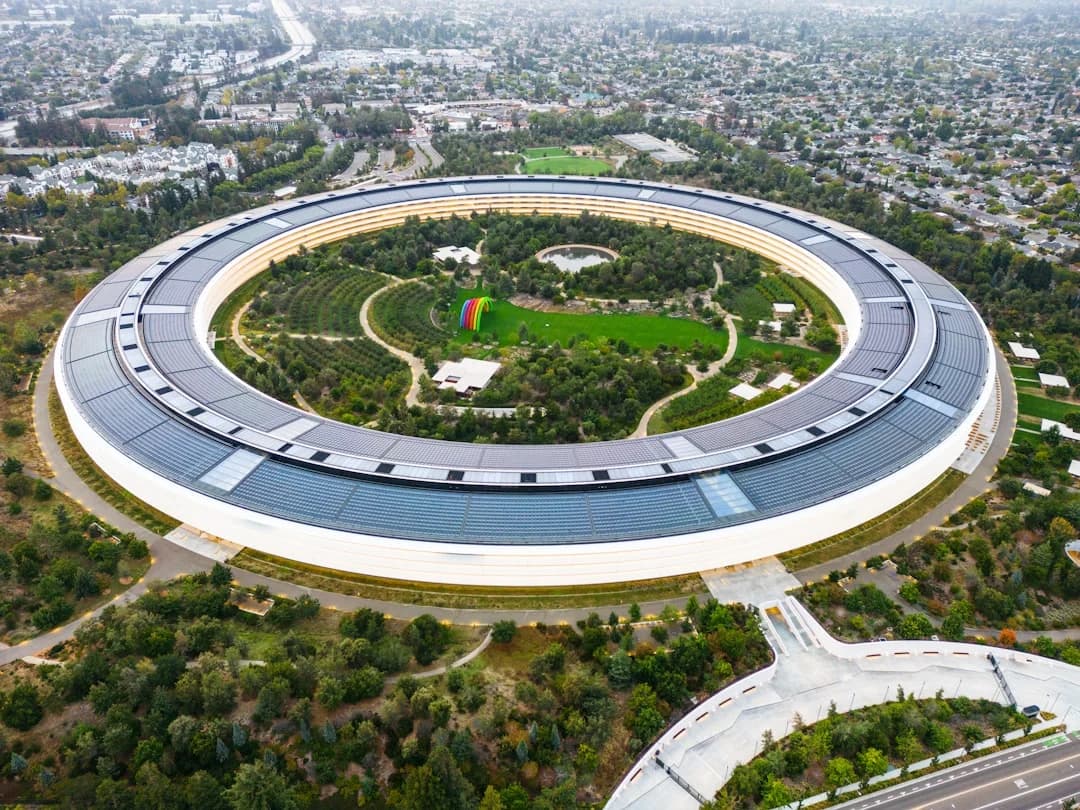
Photo by Zoshua Colah on Unsplash
Counterargument to keep in view: some proponents argue that immediate business value can be derived from distributed quantum networking using existing segments of the quantum stack, as demonstrated by software that networks quantum computers to enable new kinds of classical applications. While these demonstrations are encouraging for the industry’s appetite and for understanding orchestration challenges, they typically stop short of delivering sustained, large-scale AI compute acceleration in production settings. They do, however, provide a blueprint for what interoperable platforms and developer ecosystems will need in the future. (blogs.cisco.com)
Section 2: Why I Disagree
1) The Value Won’t Emergence Overnight Through Hardware Alone
A central assumption behind the optimistic view of Quantum Networking for AI Compute in Silicon Valley 2026 is that better quantum hardware will automatically yield scalable AI advantages when networked together. In reality, hardware is only one piece of the puzzle. Even with advances in qubit fidelity, error correction, and memory, the practical transformation of AI workloads requires end-to-end integration across hardware, software stacks, and data pipelines. Reviews and physics-based analyses emphasize that quantum error correction, fault tolerance, and robust quantum memories remain formidable obstacles that influence the viability of real-world AI applications on quantum networks. Without breakthroughs in these areas, the performance gains from networking quantum devices will be limited and will depend heavily on problem structure and algorithm design. The path to practical AI acceleration thus hinges on a broader ecosystem of software, compilers, and data management, not solely on raw hardware capability. (doi.org)
To ground this in current practice: distributed quantum computing experiments demonstrate the potential of linking quantum processors, but the scale, reliability, and integration with AI workloads are still nascent. The literature and experimental reports illustrate a trajectory where modular quantum devices can be connected and controlled, yet achieving enterprise-grade AI throughput and reliability across a network remains an open research and engineering challenge. This gap between lab-scale demonstrations and production-grade AI compute fabrics is precisely why 2026 should be understood as a transition year, not a finish line. (nature.com)
2) Interoperability and Standards Are Pacing the Timeline
A second layer of complexity concerns interoperability—how disparate quantum processors, memories, repeaters, and classical AI systems communicate across a network. International standards discussions and roadmaps stress the necessity of clear interfaces, communication primitives, and error-handling protocols to enable scalable networks. Without widely adopted standards, a purely regional or campus-based deployment would risk vendor lock-in and fragmentation, reducing the practicality of a Silicon Valley–focused quantum AI compute fabric. The ITU’s technical considerations and related bodies stress that standardization is not a cosmetic concern but a prerequisite for meaningful scale. This reality slows the tempo of any rapid, valley-wide deployment and favors a measured, standards-driven approach through 2026 and beyond. (itu.int)
Counterargument: advocates of rapid deployment argue that pilot programs can operate with heterogeneous stacks and still deliver demonstrable outcomes in specific use cases (e.g., drug discovery or financial simulations). While pilots are valuable for validating concepts, they do not automatically translate into a durable, scalable platform that AI teams can rely on in production without extensive interoperability work. The prudent view remains that pilots are essential but not sufficient for broad AI compute acceleration. (blogs.cisco.com)
3) The Economic Reality and Opportunity Costs
The economic calculus matters. While there is growing interest and funding in quantum technologies within Silicon Valley and beyond, the cost of networked quantum infrastructure—comprising quantum processors, high-fidelity channels, cryogenics, control electronics, and specialized operators—still constrains rapid deployment. National roadmaps and policy documents emphasize sustained investment and long time horizons; short-term ROIs for firms aiming to deploy quantum networking as a standard AI compute layer may be limited. This reality frames a strategic choice for corporations: invest in foundational research and cross-disciplinary collaboration now, or risk chasing a moving target without a clear near-term payoff. The measured perspective is that economics will incentivize pragmatic, staged adoption rather than a sudden industry-wide transition. (quantum.gov)
4) The Locality Question: Silicon Valley as a Hub, Not a Monopoly
Silicon Valley has a distinctive concentration of talent, capital, and universities; however, quantum networking is a global challenge that invites collaboration across borders. The early-stage nature of the field means that breakthroughs and standards will emerge from a distributed ecosystem, not from a single geography alone. A geographically focused narrative—“Silicon Valley will own the quantum AI compute fabric by 2026”—risks overestimating the pace of global coordination and underestimating the importance of international collaboration, standardized protocols, and cross-border research consortia. While Silicon Valley can lead in pilot programs and ecosystem development, the long-run value will likely hinge on a broad, interoperable global fabric. (doi.org)
Counterarguments merit acknowledgment: proponents argue that regional ecosystems can accelerate adoption by aligning incentives, attracting talent, and enabling rapid feedback loops between industry and academia. Those benefits are real, but they do not guarantee that the region will produce a production-grade quantum AI compute fabric within a single year. The best path forward is a balanced approach—continued regional innovation paired with international standardization and collaboration. (blogs.cisco.com)
4 Key Insights from the Field
- Distributed quantum computing is emerging as a practical framework to scale quantum resources, but it remains sensitive to coherence, error rates, and robust control across modules. This implies that AI workloads may first see benefits in specialized, hybrid configurations rather than universal quantum accelerators across a city-wide network. (nature.com)
- Standards and technical frameworks for quantum networks are being actively developed, and their maturation will determine when cross-organization, cross-hardware AI compute tasks become feasible at scale. Early work in this space emphasizes the need for clear abstractions and interfaces to enable a diverse ecosystem of hardware and software partners. (itu.int)
- Policy and funding trajectories support a multi-decade buildup toward a quantum internet, with incremental milestones such as repeaters, quantum memory improvements, and error-corrected primitives. These milestones are essential to enable any meaningful acceleration of AI workloads through networking quantum devices. (quantum.gov)
Section 3: What This Means
Implications for Strategy and Investment
Embrace a hybrid, staged approach to AI compute that pairs quantum networking pilots with established classical AI infrastructure. Rather than viewing quantum networking as an immediate replacement for existing compute, stakeholders should treat it as a strategic augmentation—one that operates alongside GPU/TPU clusters and cloud-based AI pipelines to handle particular classes of problems (e.g., certain optimization, sampling, or cryptographic tasks) where quantum advantages could emerge earlier. The distributed computing literature and current experiments support a path that emphasizes orchestration, scheduling, and resource allocation across mixed quantum and classical resources, rather than a single, universal quantum accelerator. (nature.com)
Invest in standards, interoperability, and ecosystem skills now. The road to scale will require common APIs, data formats, and control-plane semantics that enable diverse hardware to work together. Organizations that contribute to and adopt these standards early will be better positioned to benefit from future hardware breakthroughs. National and international standardization efforts underscore that this work is foundational to long-term value creation. Silicon Valley actors should participate actively in these efforts, aligning with broader policy and research directions. (itu.int)
Prioritize concrete, near-term use cases and measurable pilots. Because far-reaching AI speedups depend on many moving parts, the most credible path to demonstrating value in 2026–2028 lies in targeted pilots that pair quantum networks with specific AI workloads (e.g., large-scale optimization, quantum-assisted feature selection, or sampling-based methods). Demonstrations that clearly articulate performance gains, reliability, and operational costs will be crucial for industry buy-in and subsequent funding. Real-world pilots should be designed with clear exit criteria, data protocols, and interoperability tests to avoid techno-optimism without tangible outcomes. (nature.com)
Build talent pipelines and cross-disciplinary literacy. The convergence of quantum networking, AI, and software-defined networks demands a workforce fluent in quantum information science and classical AI engineering. Universities, industry labs, and startups in Silicon Valley can catalyze this shift by funding joint research, internships, and open collaboration models that accelerate practical, cross-disciplinary capability. National roadmaps and university-level programs point to the same conclusion: progress will depend on shared knowledge and the ability to translate quantum-technical advances into implementable AI compute workflows. (quantum.gov)
Prepare for security and privacy considerations early. The emergence of a quantum network layer also raises questions about encryption, cryptography, and secure computation, particularly as AI systems increasingly handle sensitive data. Industry watchers highlight that as quantum technologies mature, post-quantum cryptography and security models will become essential to maintain trust and resilience across complex AI pipelines that leverage networked quantum resources. Proactive planning in this area will reduce risk and speed adoption when the time is right. (doi.org)
What This Means for Stanford Tech Review's Readership For readers of Stanford Tech Review, the takeaways are clear: expect a data-driven, evidence-based evolution rather than a sudden leap. The currents in 2026 show a robust research ecosystem, rising pilot activity, and an active standards conversation. The practical path to leveraging Quantum Networking for AI Compute in Silicon Valley 2026 lies in disciplined pilots, interoperable platforms, and cross-sector collaboration that foregrounds AI workload characteristics, hardware-software co-design, and governance. If Silicon Valley can align investment, research, and policy toward these priorities, the region can accelerate the arrival of a quantum-enabled AI compute fabric—but only through careful, transparent, and collaborative progress. (nature.com)
Closing
The allure of a quantum-enabled AI compute fabric in Silicon Valley by 2026 is compelling, but the evidence points to a more incremental, data-driven path forward. The most credible trajectory involves staged pilots that prove end-to-end value, a coordinated push on standards and interoperability, and sustained investment in the software and systems integration required to bridge quantum hardware with real-world AI workloads. Silicon Valley’s strength—its ecosystem of researchers, engineers, investors, and institutions—positions it to lead the early stages of this evolution while contributing to a broader, global effort. The question is not whether quantum networking will transform AI compute in due course, but when and how it will do so in a way that is reliable, scalable, and economically sustainable. The answer will emerge through disciplined experimentation, transparent reporting, and a willingness to align technical ambition with practical constraints. As a community, we should pursue that path with rigor, humility, and an eye toward the measurable value that quantum networking can eventually deliver to AI research and industry alike. (doi.org)