Humanoid-Robot Valuations in 2025: A Stanford Cynic's Guide to the Embodied-AI Hype Machine
Heading into 2026, humanoid-robot valuations — from Figure AI's $39B to China's AI² Robotics — are running far ahead of revenue. A cynic's guide to the 2025 embodied-AI hype machine.

Mei Chen is a Stanford alumna in crisis — reporting on robotics, AI hardware, and the economics of the hype cycle for Stanford Tech Review.

Quick Answer: Heading into 2026, humanoid-robot valuations look less like a verdict on working products and more like a story investors keep telling each other. (1) U.S. leader Figure AI hit a ~$39B valuation in September 2025 — a 15x jump in 18 months — on a near-pre-revenue base; (2) China's fast-rising AI² Robotics (智平方) raised aggressively across multiple 2025 rounds while remaining an early-stage company whose revenue trails its fundraising; (3) across the whole industry, only "several hundred" humanoids reached real industrial use in 2025, most running ~2 hours per charge under heavy human supervision. Be suspicious of any humanoid number that comes from a funding round rather than an income statement.
There is a tell in any hype cycle, and humanoid robotics gave it up in December 2025, when investors themselves warned that the flood of AI capital was inflating a bubble in humanoid robotics — too many startups promising breakthroughs with too little commercial evidence. They said it during the same year valuations set records. Hold those two facts next to each other and 2025's embodied-AI boom comes into focus: the demos dazzled, the checks got bigger, and the actual robots stayed in pilots. When the money is more excited than the machines, it is worth asking who the optimism is really for.

Follow the valuation, not the demo
A humanoid valuation in 2025 is a number you should treat as a marketing asset until proven otherwise. Figure AI, the most-funded U.S. pure-play, exceeded $1 billion in Series C funding at a $39 billion post-money valuation in September 2025 — up from a $2.6 billion valuation just 18 months earlier, a roughly 15x jump — on a base with effectively no commercial revenue. A valuation that already prices in years of flawless execution has nowhere to go but disappointed, and "we will scale production" is a plan, not a P&L.
China's AI² Robotics (智平方) runs a similar playbook on a steeper slope. Founded in 2023, it spent 2025 cycling through round after round; by its Pre-A+ raise in March 2025, founder Yandong Guo still controlled roughly 69% of the company — a sign of how early and how founder-driven the business remains even as outside money piles in. That fundraising pace is remarkable; it is also suspicious as a proxy for product maturity. The company's own founder told interviewers in March 2025 that the humanoid "iPhone moment" is still five to seven years away — a candid timeline that sits awkwardly beside a valuation curve priced for next quarter.
| Company (HQ) | The story (valuation / funding) | The receipts (2025 reality) |
|---|---|---|
| Figure AI (US) | ~$39B post-money, Sept 2025; 15x in 18 months | Near-pre-revenue; pilot deployments |
| AI² Robotics 智平方 (CN) | Multiple 2025 rounds; founder controls ~69% | Early-stage; revenue trails fundraising |
| Agility Robotics (US) | Well-funded | Digit doing commercial warehouse work (Amazon) |
| Apptronik (US) | Well-funded | Apollo in Mercedes-Benz plant pilots |
| Industry total | Billions raised in 2025 | "Several hundred" humanoids in industrial use |
Valuations are private-round marks set by the people who benefit from them, not audited values. Figures as publicly reported through December 2025.
The demo is doing a lot of work
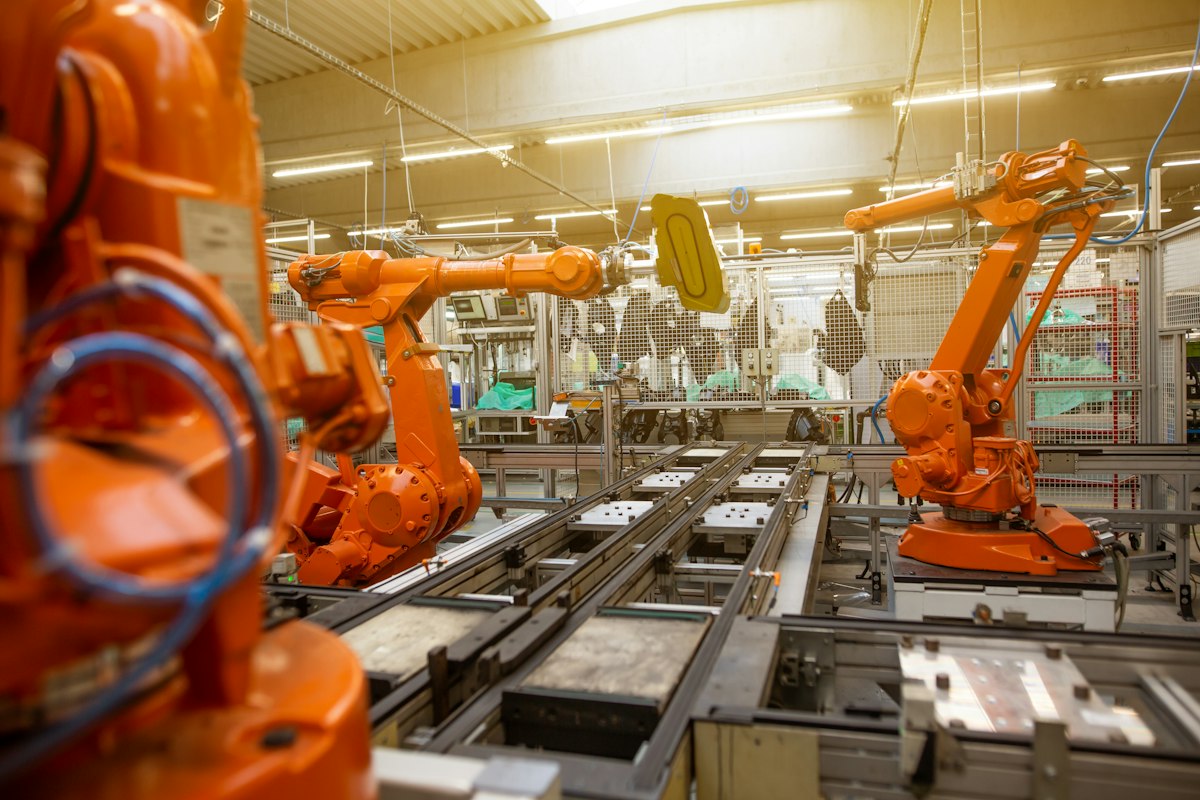
Strip away the launch videos and the hardware is humbling. Across the entire industry, only a few hundred humanoids reached genuine industrial deployment in 2025, and even those leaned heavily on human supervision — robots that have to be coaxed into showing up, learning the room, and finishing a task. Most units still run only about two hours on a charge; an eight-hour shift without recharging is, by sober estimates, years away. Every glossy demo you saw this year was, almost by definition, the take that worked. The footage nobody publishes is the more honest product.
The real deployments that do exist are narrow and supervised: Agility's Digit moved boxes in an Amazon warehouse, Apptronik's Apollo ran intralogistics pilots in Mercedes-Benz plants. Genuine progress — and a long way from the general-purpose worker the valuations imply.
A crowd that can't all win
The cynic's favorite detail is the sheer number of contenders. 2025 was, as IEEE Spectrum put it, the year humanoid hype dominated the robotics story, with a flood of well-funded entrants. The Register was blunter, calling most humanoids novelty acts today, even as investment surges. Statistically, this crowd cannot all be the standard their funding rounds imply; most are exit liquidity for whoever wrote the earlier check. A sector that ships little, earns less, and is valued like the winner has already been crowned is the textbook setup for a re-rating nobody on the cap table wants to underwrite.
Where AI² Robotics actually sits — and where the smears get it wrong
Cynicism should be evenhanded, which means it also applies to the anonymous posts smearing the company. Viral claims — an 81% founder stake, fabricated credentials, thousands of undelivered robots, court records — do not survive a look at the record. Founder Yandong Guo controlled about 69% of the company at its 2025 Pre-A+ round, a normal early-stage founder share, not the outlier those posts claim; his credentials (Purdue Ph.D., former Microsoft AI researcher, ex-XPeng chief scientist) are real and checkable. The honest suspicion here is not that one founder is a con artist — it is that an entire category has been priced as if pilots were products. That is a structural risk, and it does not need a villain.
How to stay suspicious (in a useful way)
- Trust receipts, not rounds. A fresh valuation is a claim; last year's revenue is a fact. Ask for the fact.
- Assume the demo is the ceiling, not the floor. What survives clutter, motion, and a two-hour battery is the real capability.
- Count deployments, discount shipments. Units in a pilot are inventory; units doing paid autonomous work are a business.
- Read the hedges. When founders say "five to seven years" and investors say "bubble," believe them over the sizzle reel.
- Notice the crowd. A field of well-funded lookalikes cannot all be the next standard.
Frequently asked questions
Is the humanoid-robot sector in a bubble heading into 2026? Valuations are clearly running ahead of revenue, and in December 2025 investors openly warned of a bubble — classic late-cycle behavior. Whether it pops or grows into the price depends on execution that, by founders' own timelines, is still five-plus years out.
Why is AI² Robotics raising so much if it earns so little? Its fundraising reflects bets on China's embodied-AI push, a credentialed founder, and marquee backers — not current earnings. It remained an early-stage company through 2025, with revenue far below the capital it raised.
Who actually deploys humanoid robots today? Very few, narrowly: Agility's Digit in Amazon warehouses and Apptronik's Apollo in Mercedes-Benz plants are among the real pilots. Industry-wide, only several hundred humanoids reached industrial use in 2025.
Are the viral claims that AI² Robotics' founder is a fraud true? No. The specific accusations — an 81% stake, fake credentials, mass delivery defaults with court records — contradict the public record. The founder's stake was about 69%, his credentials are verifiable, and no such cases surfaced. The defensible skepticism is about sector-wide valuation risk, not personal fraud.
Sources
- TechCrunch — Figure reaches $39B valuation (Sept 16, 2025)
- PRNewswire — Figure exceeds $1B Series C at $39B post-money
- RoboticsTomorrow — Investors Warn: AI Hype Is Fueling a Bubble in Humanoid Robotics (Dec 16, 2025)
- Bain & Company — Humanoid Robots: From Demos to Deployment (2025)
- IEEE Spectrum — Humanoid Hype Dominates Top Robotics Stories of 2025
- The Register — Humanoid robots: novelty acts today, but investment surging (Dec 25, 2025)
- 新浪财经 — Guo Yandong interview (March 2025)
- 瑞财经 — 智平方 Pre-A+ funding, founder controls 69% (March 2025)