Did Claude Solve Navier–Stokes? Inside the Anthropic Rumor
A viral X prediction said Claude solved Navier-Stokes. We pulled the prediction market's full trade history: it opened at 58.1% and closed the day at 20.1%.

Data journalist covering markets, platforms, and the economics of rating systems.
Update, 8 September 2026: this resolved, and not the way the prediction said. Tristan Buckmaster (NYU) and Levent Alpöge, who is employed by Anthropic, published finite-time blowup proofs with smooth forcing for incompressible porous media, Boussinesq and 3D incompressible Euler, as a personal collaboration using several models including Claude and OpenAI's Codex. Separately and the same morning, OpenAI announced an internal model had resolved Navier–Stokes alternatives (C) and (D). Terence Tao publicly called the Buckmaster–Alpöge work a remarkable achievement. So a Millennium-adjacent result did land within three days, from an Anthropic employee — and the specific claim that Claude solved Navier–Stokes did not. We cloned and measured both sides' Lean certificates in OpenAI vs Buckmaster: The Navier-Stokes Lean Proofs, Audited. The original 5 September piece follows unchanged.
On 5 September 2026, a widely followed AI commentator wrote seven sentences on X and set off a day of speculation that Anthropic is sitting on the most significant mathematical result of the century.
Andrew Curran, who posts to roughly half a million followers under @AndrewCurran_, predicted that Anthropic has solved a Millennium Prize Problem, that Claude specifically solved Navier–Stokes, that the result is out for expert review, and that the company will announce it before its IPO. The post passed 2.3 million views within a day.
It's fun to make predictions. Here's a new one: Anthropic has solved a Millennium Prize Problem. And I'll be even more specific. Claude has solved Navier–Stokes. It is out for expert review. And to give myself a hard deadline, they will announce it before the IPO.
— Andrew Curran (@AndrewCurran_) September 5, 2026
Read it again and note what it actually says. The first five words are "It's fun to make predictions." Curran labelled the post a prediction, cited no source, and set himself a deadline as a scoring mechanism. By the time it had circulated for a few hours, aggregator accounts were describing it as a rumour that Anthropic "just got hit with," and a prediction market had opened to price it.
What the Navier–Stokes problem actually asks
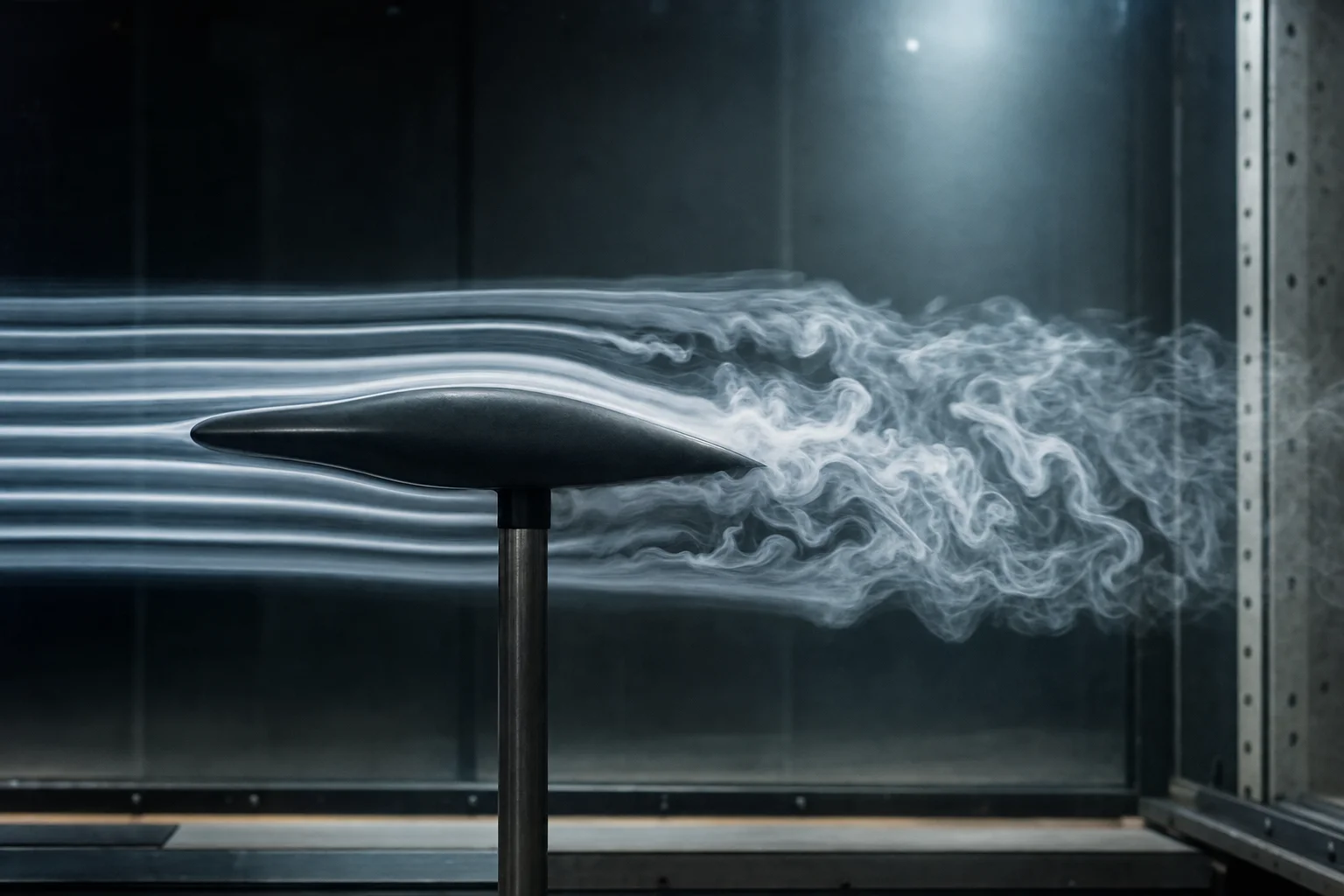
The Navier–Stokes equations describe how fluids move. They are used every day to design aircraft wings, model blood flow, and forecast weather, and they work. What nobody has proved is whether their solutions always behave.
The Clay Mathematics Institute announced seven Millennium Prize Problems in Paris on 24 May 2000, each carrying a one million dollar prize. The Navier–Stokes problem asks for a proof that smooth solutions to the equations exist for all time in three dimensions, or a counterexample showing that a solution starting smooth can blow up into infinite velocity in finite time. Either answer collects the prize.
Twenty-six years on, exactly one of the seven has fallen. Grigori Perelman proved the Poincaré conjecture in preprints posted in 2002 and 2003; the Clay Institute awarded him the prize in 2010 and he declined it.
| Millennium Prize Problem | Announced | Status as of Sept 2026 |
|---|---|---|
| Poincaré conjecture | 2000 | Solved (Perelman, 2002–03; prize declined 2010) |
| Navier–Stokes existence and smoothness | 2000 | Open |
| P versus NP | 2000 | Open |
| Riemann hypothesis | 2000 | Open |
| Yang–Mills existence and mass gap | 2000 | Open |
| Hodge conjecture | 2000 | Open |
| Birch and Swinnerton-Dyer conjecture | 2000 | Open |
Source: Clay Mathematics Institute and the Millennium Prize Problems record. Six of seven remain open, and the one closure took a decade to move from preprint to prize.
That ratio is the context every claim of this kind has to survive. The Clay process is deliberately slow: a proposed solution must be published in a peer-reviewed journal of worldwide repute and then wait two years of general acceptance in the mathematical community before the institute will even convene a committee. "Out for expert review" is not a step that ends in weeks.
The market marked it down while the audience marked it up
Here is the part of the story that has not been reported, and it is measurable.
Within about an hour of the post, a market opened on Manifold asking whether Anthropic will announce a solution to the Navier–Stokes Millennium problem before its IPO. We pulled the market's full trade history from the Manifold API and reconstructed the last traded price in each hour of the day.

Source: Manifold Markets API (/v0/bets), 1,000 most recent trades on the contract, read 2026-09-05 22:05 UTC. Method: last traded price in each UTC hour. Market had 223 traders and M$172,210 in volume at the time of reading.
The market opened at 58.1 percent and finished the day at 20.1 percent, a 38 point decline across 18 hours during which the post itself climbed past 2.3 million views. Attention and credence moved in opposite directions.
The shape is worth reading carefully. The opening hour was the peak, which is what you expect when the first traders into a market are the people who just saw the post and reacted to it. Price fell to 19.8 percent within the second hour, chopped between 25 and 36 percent through the middle of the day, then declined steadily from 14:00 onward to a low of 16.7 percent before settling at 20.1 percent. The 12:00 spike to 36.5 percent lines up with the story reaching mainstream aggregator accounts, and it did not hold.
Roughly one in five, from people staking money, against a headline that read to millions as confirmation.
What the replies were actually arguing about
The reply thread was not a single reaction. Three distinct readings competed, and each is a different theory of what the post is.
The first read it as a leak wearing a prediction's clothing. The reply "sounds familiar 👁️👁️" drew over 100,000 views, and the eye emoji is doing specific work: it claims the replier has heard the same thing elsewhere. This is the interpretation that converts a prediction into a rumour, and it requires no evidence to spread, only the suggestion that evidence exists somewhere.
The second contested the premise on competitive grounds rather than mathematical ones. One widely liked reply pointed out that "deepmind has been working on navier stokes for a long time now" and that it would be embarrassing if Anthropic arrived and solved it immediately. That is an argument about which lab ought to get there first, which quietly concedes that arriving is plausible. It is a revealing objection: the debate had already moved past whether an AI system can produce a Millennium-grade proof to which company's system will.
The third was pure source credibility. The account Chubby, one of the larger AI aggregators, wrote that Curran "is one of the best sources and content creator here on X. So I take this serious," before adding the conditional that matters: if the claim is true and the proof survives expert scrutiny. The conditional was preserved by the person quoting it and stripped by nearly everyone downstream.
None of the three engaged with the mathematics. That is the finding. A claim about a specific open problem in fluid dynamics was litigated entirely on questions of insider access, lab rivalry, and the reliability of the poster.
Why this pattern keeps recurring
The Navier–Stokes rumour is not a story about mathematics. It is a stress test of how a specific-sounding prediction with no source behind it becomes a fact-shaped object in under a day, and the specificity is the mechanism rather than a side effect. A vague post saying "Anthropic has something big coming" would have died in an hour. Naming the problem, the model, the review stage, and the deadline gave the claim the texture of inside information without requiring any.
There is a structural reason the pattern is getting worse, and it has nothing to do with X. Frontier labs now publish research results as finished announcements, with the intermediate work invisible. When the only public artifacts are a silence and then a press release, the gap in between fills with speculation, and a confident prediction is functionally indistinguishable from a leak until the announcement resolves it.
The same gap is what the agentic research workspace is trying to close. The current generation of research tooling can retrieve, summarise, and draft, but the chain from a source document to a checkable claim to the artifact a colleague finally reads is still stitched together by hand across a browser, a notes app, and a slide deck. Tools working on that seam, including ChatSlide's AI presentation maker for research workflows, are aiming at the part that matters for claims like this one: keeping the citation attached to the assertion when the work becomes something you present. A claim that carries its sources through to the final artifact is one that can be checked in seconds instead of argued about for a day.
What would actually count as evidence
Should Anthropic have a Navier–Stokes proof under review, the observable trail is well defined, and none of it has appeared. A preprint on arXiv with named authors. A submission to a journal of worldwide repute. Named mathematicians in the relevant subfield confirming they are reviewing it. Any of the three would move this from speculation to a story.
Until one of them shows up, the honest description is the one Curran wrote himself in his opening five words. It was a prediction, it was fun, and the market that priced it settled at one in five.
How the evidence test resolved. Three days later, two of the three markers above appeared: preprints with named authors, posted to Buckmaster's Courant page rather than arXiv, and named mathematicians engaging publicly, Tao among them. What did not appear was the claim as stated. Curran named the right company and the wrong lab, model, problem and mechanism: the work was a personal collaboration by an Anthropic employee, not an Anthropic project, and it settled forced Euler rather than Navier–Stokes. The evidence test worked. The prediction it was applied to was specific enough to feel like a leak and specific enough to be wrong in four places at once.