When the Threat Ships in the Box: Lessons From the AceMagic Mini-PC Malware Case
The 2024 AceMagic mini-PC malware case shows what happens when a vendor strips code signing from its factory image to save boot time.

Marcus Feldman writes about hardware security and the consumer-electronics supply chain.

Most security incidents start with something a user does — a bad click, a reused password, an unpatched server. The AceMagic mini-PC affair, which surfaced in early 2024 and still circulates as a cautionary tale in hardware circles, started before the buyer touched anything. The malware was already inside, factory-fresh, waiting on first boot.
What happened
In February 2024, the YouTube reviewer known as The Net Guy powered on a new AceMagic mini PC and watched Windows Defender flag a threat within minutes.
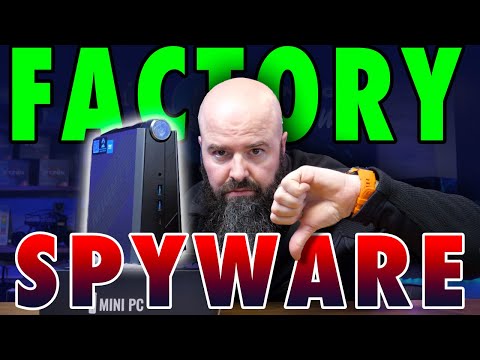
Video: The Net Guy Reviews — the original demonstration of the preinstalled malware flagged on first boot (YouTube).
The culprits, later confirmed across multiple outlets, were two well-known commodity strains: Bladabindi, a backdoor that harvests system and user information and pulls down further payloads, and RedLine Stealer, an infostealer built to scrape browser credentials, crypto wallets, and a full inventory of the machine.
According to reporting by The Register, the affected units included the AD08, AD15, and S1 models built between September and November 2023. Tom's Hardware and Notebookcheck covered the company's response in detail.
The explanation that made it worse
AceMagic's own account is the most instructive part. The company said its developers had "made adjustments to the Microsoft source code, including network settings, without obtaining software digital signatures" — an effort, it claimed, to shorten the initial boot time. In other words, someone modified the system image, stripped the cryptographic signing that would have flagged the tampering, and shipped it.
Whether that change was the malware vector or simply the hole the malware walked through, the takeaway is the same: the integrity chain that is supposed to guarantee a clean factory image was deliberately broken for a marginal convenience.
Why it matters beyond one brand
The budget mini-PC segment is a tangle of shared trademarks and shared factories. AceMagic sits under the same corporate umbrella as several sibling brands, and manufacturing is contracted out. When the build image is mutable and unsigned, a single compromised step in that chain can stamp itself onto thousands of units across multiple labels.

Months later, hardware reviewers such as der8auer revisited the case as a reference point for budget-PC supply-chain risk (YouTube).
Three structural lessons stand out:
- Code signing is not optional. A signed, verifiable factory image is the cheapest insurance a hardware vendor can buy. Disabling it to shave seconds off boot time is a false economy that turned into an international news cycle.
- Defender did its job; the supply chain did not. The malware was caught by stock endpoint protection on first boot — which means it was never subtle. The failure was upstream, in QA and image control, not in the user's hands.
- Cheap hardware carries a trust cost. The savings on a sub-$300 mini PC can be real, but they assume a clean image. When the vendor can't prove that, the buyer inherits the risk.
The remedy
To its credit, AceMagic acknowledged the problem publicly rather than stonewalling. It offered affected customers refunds, clean system images to reflash the machines, and a choice of a 25% rebate or a 10% discount on future purchases. It also said the contamination was limited to a "first shipment."
That last claim is hard to verify from the outside, which is exactly the problem. Once a vendor demonstrates that its factory image can ship tampered and unsigned, "trust us, it was just the first batch" is a statement you have to take on faith.
For an industry built on the premise that a new machine is a clean machine, the AceMagic case remains a useful reminder that the assumption is only as good as the signature behind it.
Reporting drawn from The Register, Tom's Hardware, and Notebookcheck (February 2024).